

How to Compare Hard Money Loan Rates Without a Credit Pull
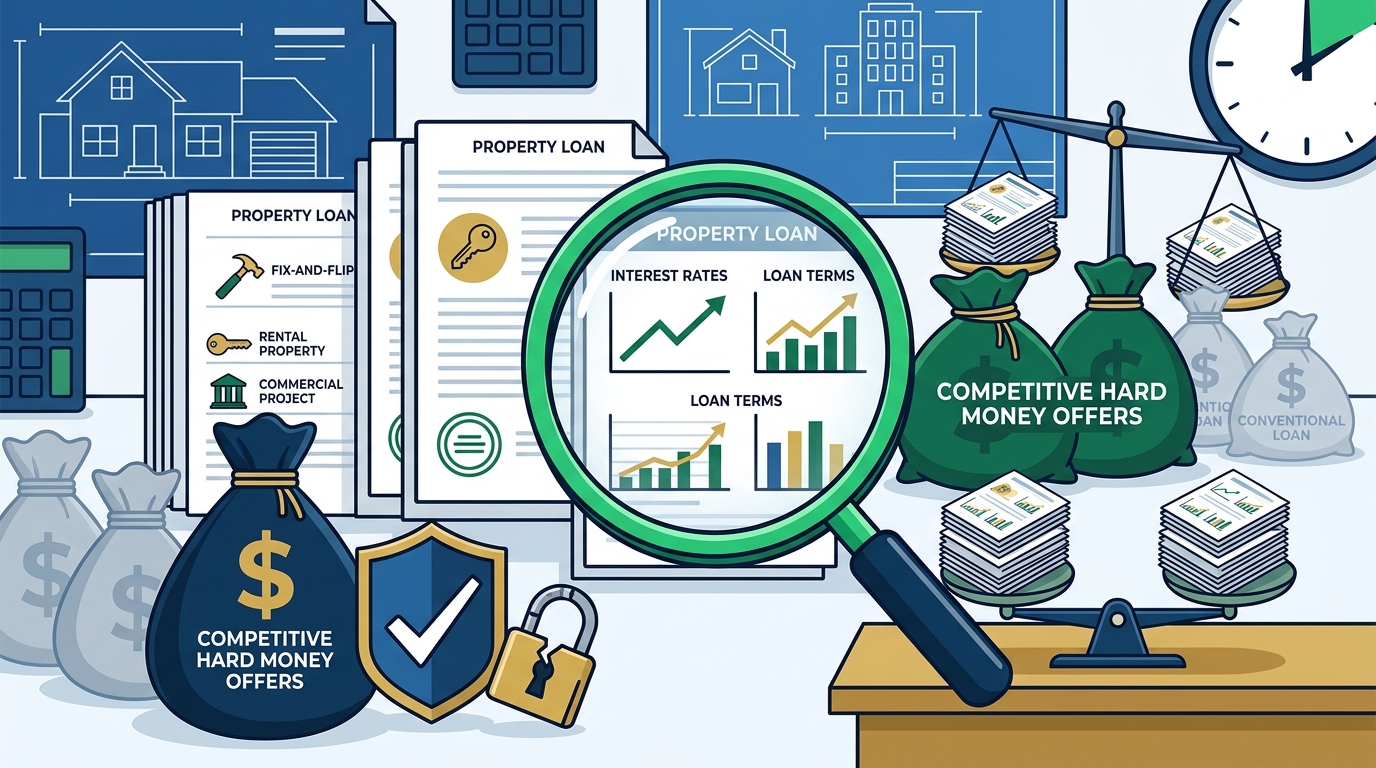
Shopping for a hard money loan used to mean filling out multiple applications, handing over your Social Security number, and watching hard inquiries stack up on your credit report. Today, borrowers can compare rates, fees, and terms from dozens of lenders without triggering a single hard credit pull. This guide walks you through exactly how to do it, why it matters for your credit health, and which tools make the process painless. Whether you are financing a fix-and-flip, a rental property, or a commercial project, the steps below will help you find competitive hard money offers while keeping your credit score intact.
What Is a Hard Money Loan?
A hard money loan is a short-term, asset-based loan funded by private investors or lending companies rather than traditional banks. These loans are primarily used for real estate investments such as fix-and-flip projects, bridge financing, and commercial property acquisitions. Repayment terms typically range from six to 36 months, and approval depends largely on the property's value rather than the borrower's credit history.
Because hard money lenders focus on collateral, they can close deals in as few as 5 to 10 days, which is critical in competitive markets. Interest rates generally fall between 9% and 15%, according to LendingTree, though the exact rate depends on factors like LTV ratio, property type, and borrower experience.
Hard Pull vs. Soft Pull: Why It Matters
A hard inquiry is a credit check initiated when you formally apply for a loan or credit card. It can lower your FICO score by 3 to 7 points and stays on your report for up to two years, according to the CFPB. A soft inquiry is a credit review that does not affect your score at all and is invisible to other lenders.
For real estate investors comparing multiple hard money lenders, the distinction is critical. If you submit five formal applications in a month, five hard inquiries could appear on your report, signaling financial risk to future lenders. By using platforms that rely on soft pulls or no credit check at all, you avoid this entirely.
When Does a Hard Pull Happen?
A hard pull typically occurs after you sign a formal loan application and authorize the lender to access your credit file. Most conventional mortgage applications require one. Many hard money lenders, however, do not require a hard pull during the initial quote or prequalification stage.
The Rate-Shopping Exception
FICO provides a rate-shopping window of 45 days during which multiple mortgage inquiries count as a single inquiry. VantageScore uses a 14-day window. While helpful, this exception only applies once you formally apply, not during comparison shopping.
Step-by-Step: Compare Rates Without a Credit Pull
1. Gather Your Property and Financial Details
Before you start, know your property type, estimated value, desired loan amount, and intended use (purchase, refinance, or cash-out). Having your loan-to-value ratio calculated in advance saves time. Use a hard money loan calculator to run preliminary numbers without entering any personal identification.
2. Use an AI-Powered Loan Marketplace
Platforms like Lendersa let you submit a loan request that compares your scenario against thousands of lender programs instantly. Lendersa gathers information about your goals to fuel its AI comparison engine without triggering a hard inquiry on your credit report, and no SSN is required to start. Your contact information stays private until you choose to move forward with a specific lender.
3. Review and Optimize Your Results
After receiving initial matches, use tools like the LoanImprove optimization engine to tweak your request. Small adjustments to loan amount or LTV can dramatically change the rates and number of interested lenders. The LoanScore system tells you how likely you are to receive competitive offers before you ever speak with a lender.
Key Factors That Affect Hard Money Rates
Understanding what drives pricing helps you negotiate better terms. Several factors influence the interest rate a borrower receives on a hard money loan:
- Loan-to-Value (LTV) Ratio: Lower LTVs mean less risk for the lender and often result in better rates. Most hard money lenders cap LTVs at 60% to 75%.
- Property Type and Condition: Single-family homes, multifamily units, commercial buildings, and vacant land each carry different risk profiles.
- Borrower Experience: Investors with a track record of successful projects typically secure lower rates.
- Loan Purpose: Fix-and-flip loans, bridge loans, and DSCR rental loans are priced differently based on projected risk and exit strategy.
- Market Conditions: In competitive lending markets, interest rates may be lower; in volatile economic climates, they rise.
Hard Money vs. Conventional Loan Comparison
| Feature | Hard Money Loan | Conventional Mortgage |
|---|---|---|
| Interest Rate | 9% - 15% | 6% - 7.5% |
| Term Length | 6 - 36 months | 15 - 30 years |
| Approval Speed | 3 - 14 days | 30 - 60 days |
| Credit Check Required | Often soft pull or none at quote stage | Hard pull required |
| LTV Ratio | 60% - 75% | Up to 97% |
| Origination Fees | 1% - 5% (points) | 0.5% - 1% |
| Primary Approval Basis | Property value / equity | Borrower creditworthiness |
| Best For | Investors, flips, bridge deals | Owner-occupied, long-term holds |
Tools That Make No-Credit-Pull Comparison Easy
Not all comparison tools are created equal. The best platforms combine breadth of lender network with intelligent matching. Lendersa is a loan marketplace that connects borrowers with lenders, allowing them to compare conventional and hard money options for residential, commercial, and vacant land properties. Its AI engine compares over 20 data points against lender underwriting guidelines, far more than the 4 to 8 data points used by most competing portals.
The platform also includes a guide comparing direct lenders and hard money brokers, helping borrowers decide which channel is right for their deal. For borrowers exploring specific markets, Lendersa maintains state-level lender directories with over 1,230 hard money lenders in California and more than 1,000 in Florida alone.
Key Takeaways
- You can compare hard money loan rates from multiple lenders without a hard credit inquiry by using marketplace platforms that rely on property data and self-reported financials.
- A soft inquiry is a credit review that does not impact your score, while a hard inquiry can lower it by 3 to 7 points.
- Hard money loan interest rates currently range from 9% to 15%, depending on LTV, property type, and borrower experience.
- Lendersa lets you submit a loan request with no SSN and no impact on your credit, then receive competing offers from matched lenders.
- Small changes to your loan request, such as reducing LTV by 1%, can unlock significantly better rates and more lender interest.
- Always compare at least 3 to 5 lenders before committing, especially for complex or high-value deals.
- Use the FICO 45-day rate-shopping window if you do proceed to formal applications to minimize hard-pull impact.
Frequently Asked Questions
Can I really compare hard money loan rates without giving my SSN?
Yes. Platforms like Lendersa allow you to enter property details, loan amount, and basic financial information without providing your Social Security number. The AI matches your scenario to lender programs and returns rate estimates without initiating any credit inquiry.
Will a soft credit check show up on my credit report?
Soft inquiries may appear on your personal credit report, but they are visible only to you. Other lenders cannot see them, and they have zero impact on your credit score.
What is a typical interest rate on a hard money loan in 2026?
Current hard money loan rates for first-position loans generally range from 9.5% to 12%, with second-position loans ranging from 12% to 14%. Rates vary by lender, LTV, and borrower profile.
How many lenders should I compare before choosing one?
Industry experts recommend comparing at least 3 to 5 lenders, though for complex or high-risk scenarios you may want to check 10 or more. Marketplace platforms automate this process by presenting multiple offers simultaneously.
Do hard money lenders check credit at all?
Many hard money lenders perform no credit check during the initial quoting phase. Some may run a soft pull. A formal hard pull typically only occurs after you select a lender and submit a full application. Asset-based "hard-hard money" lenders may skip credit review entirely, lending based solely on equity.
What is a LoanScore on Lendersa?
LoanScore is a proprietary metric ranging from 0 to 99 that measures the likelihood your loan request will attract competitive offers from participating lenders. A high LoanScore (above 80) indicates strong lender interest, while a low score suggests you should optimize your request before submitting.
How fast can a hard money loan close?
Hard money loans can close in as few as 3 to 14 days, depending on the lender and deal complexity. This speed is one of the primary advantages over conventional mortgages, which typically take 30 to 60 days.
Is Lendersa a direct lender?
No. Lendersa is exclusively a loan matching marketplace, not a direct lender. Its network includes hundreds of direct lenders, hard money brokers, mortgage bankers, credit unions, and traditional banks competing for your business.
Start Comparing Hard Money Rates Today
Stop guessing and start comparing. Submit a free loan request on Lendersa.com to see competing hard money offers matched to your exact scenario. No SSN required, no credit impact, and no obligation. Let lenders compete for your deal so you walk away with the best rate and terms possible.