

Private lending fills a critical gap when banks say no, but not every private lender has your best interests at heart. A loan shark is an unlicensed or unscrupulous lender who charges illegally high interest rates and may use intimidation to collect debts. Knowing the difference between a trustworthy hard money lender and a predatory operator can save you thousands of dollars and protect your property. In this guide, you will learn the exact red flags to watch for, the hallmarks of a legitimate lender, and practical steps you can take before signing any loan agreement.
What Is Private Lending?
Private lending is a form of financing in which non-bank entities, such as individual investors or small funds, provide loans secured primarily by real estate equity. A hard money loan is a loan secured by real estate and originated by private investors, with approval based mainly on the ratio between the loan amount and the property's market value.
Because private lenders set their own underwriting guidelines, rates and terms vary widely from one lender to the next. That variability is exactly why borrowers need to compare multiple offers through a platform like Lendersa's hard money calculator before committing.
What Exactly Is a Loan Shark?
A loan shark is an illegal or unethical money lender who offers loans at exorbitantly high interest rates and often uses threats or violence to enforce repayment. Unlike legitimate lenders, loan sharks operate outside the boundaries of the law, providing loans without formal contracts or clear terms. According to Wikipedia, illicit loan sharking is treated as a high-level crime by law enforcement due to its links to organized crime.
It is important to note that high rates alone do not make a lender a loan shark. As Lendersa explains in its loan shark guide, the main difference is that loan sharks care only about enriching themselves, while legitimate private lenders structure loans that benefit borrowers and include a clear exit strategy.
7 Red Flags That Signal a Loan Shark
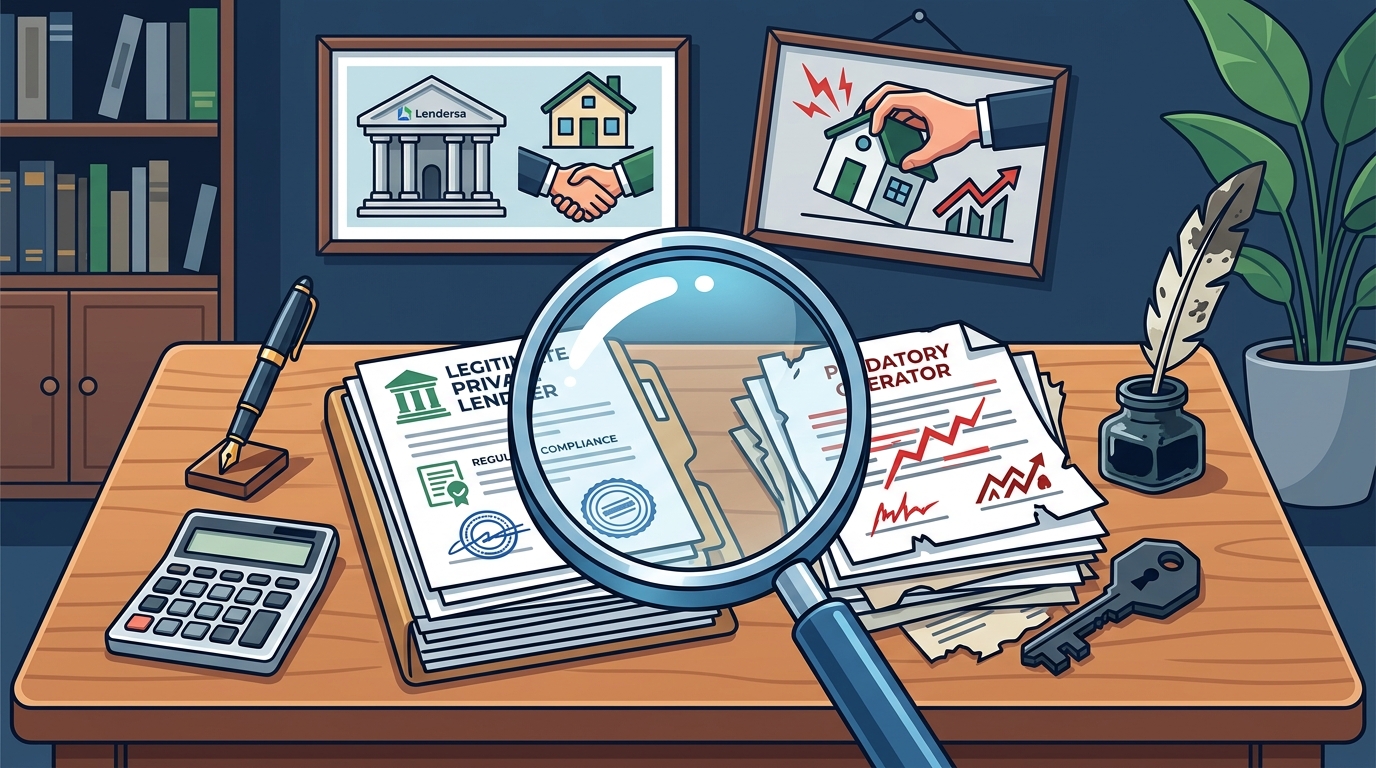
1. No Written Agreement or Vague Terms
Legitimate lenders always provide written disclosures of rates, fees, and conditions before you commit. If a lender refuses to put terms in writing or is vague about the total cost, walk away immediately.
2. Extremely High Interest and Hidden Fees
Watch for rates that are 6% to 15% above bank rates for a similar loan type, combined with total fees exceeding 5% to 20% of the loan amount disguised under names like "warehouse fees" or "document fees." Loan sharks have been known to charge rates as high as 400% APR.
3. No Credit or Background Checks
A lender that never verifies your ability to repay is not protecting you; it is setting a trap. Reputable private lenders perform at least a basic review of creditworthiness or collateral value.
4. Pressure Tactics and Urgency
Predatory lenders use aggressive sales tactics and exploit borrowers' lack of understanding of financial transactions. If someone pushes you to sign today with "limited-time" offers and refuses to give you time to review documents, treat it as a warning.
5. Very Short Loan Terms with No Extension
Loan terms of only 3 to 6 months with no extension option almost guarantee a default, which is exactly what a loan shark wants in order to seize your property.
6. Prepayment Penalties That Match Loan Duration
If the prepayment penalty period equals the full loan term, you are effectively locked in and unable to refinance or sell without paying a steep penalty.
7. No Verifiable License or Online Presence
Hard money lenders still require valid state licenses. A lender with no CFPB-regulated presence, no NMLS number, and only a mobile phone number is a major risk.
What a Legitimate Private Lender Looks Like
A legitimate private lender is a licensed entity that provides transparent loan terms, performs due diligence on borrowers, and structures loans with a realistic repayment plan. Here are the traits you should expect:
- Valid state license and NMLS registration. Verify through your state's licensing website.
- Clear, written disclosures of all rates, fees, and conditions before any commitment.
- Reasonable fees typically ranging from 2% to 7% of the loan amount.
- Loan terms of 12 months or longer with modest extension options.
- No threats or harassment. Legitimate lenders use lawful methods to recover loans.
- A deep track record with years of reviews on platforms like the Better Business Bureau, Yelp, and LinkedIn.
Using a marketplace like Lendersa's hard money directory lets you compare thousands of verified lenders, reducing your exposure to bad actors.
Side-by-Side Comparison: Loan Shark vs. Legitimate Lender
| Factor | Loan Shark | Legitimate Private Lender |
|---|---|---|
| Interest Rate (above bank rate) | 6%-15%+ above bank rate | 2%-10% above bank rate |
| Total Fees | 5%-20% of loan amount (often hidden) | 2%-7% of loan amount (disclosed upfront) |
| Loan Term | 3-6 months, no extension | 12+ months with extension options |
| Prepay Penalty | Equals full loan duration | Shorter than loan term or none |
| Written Contract | None or vague | Detailed, legally compliant |
| Licensing | Unlicensed or unverifiable | State-licensed, NMLS registered |
| Credit Check | None required | Basic review of creditworthiness |
| Collection Methods | Threats, harassment, intimidation | Lawful recovery, workout arrangements |
How to Verify a Lender Before You Borrow
Step 1: Check State Licensing Records
Search your state's financial regulatory website for the lender's name and license number. In California, for example, use the DFPI portal. Make sure the business name, individual name, and address match official records.
Step 2: Research Their Online Reputation
Enter the lender's business name and the name of the person you are dealing with into a search engine to find reviews, complaints, or recommendations. Be suspicious if you only find very recent information with no history.
Step 3: Compare Multiple Offers
Never accept the first offer. Check out at least 3 to 5 lenders before deciding. A platform like Lendersa's hard money marketplace lets lenders compete for your deal, giving you leverage and transparency. You can view offers instantly without providing your Social Security number.
Key Takeaways
- High interest rates alone do not make a lender a loan shark; the intent and structure of the loan matter more.
- Loan sharks avoid written contracts, skip credit checks, and use intimidation to collect.
- Legitimate private lenders hold valid state licenses and NMLS registrations.
- Always request written disclosures of all fees and terms before signing anything.
- Compare at least 3 to 5 lenders before making a decision.
- Use a trusted marketplace like Lendersa to let vetted lenders compete for your business.
- If you suspect a lender is operating illegally, report them to your state's financial regulator or the CFPB.
Frequently Asked Questions
What is the difference between a hard money lender and a loan shark?
A hard money lender is a licensed private lender who provides real estate-backed loans with transparent terms and a defined exit strategy. A loan shark operates without a license, charges illegally high rates, and may use threats to collect debts.
Are high interest rates a sign of predatory lending?
Not necessarily. Private lenders charge higher rates than banks because they accept higher-risk borrowers and fund faster. It becomes predatory when the rates are combined with hidden fees, unreasonable terms, and no regard for the borrower's ability to repay.
How can I verify a private lender's license?
Search your state's financial regulatory website or the NMLS Consumer Access portal at nmlsconsumeraccess.org. Verify that the lender's name, address, and license status are current.
Is it illegal to borrow from a loan shark?
In most U.S. states, it is not illegal to borrow from a loan shark, but the lending itself is illegal. You generally will not face charges if you report one to authorities.
What should I do if I suspect a lender is a loan shark?
Stop all communication, do not sign any documents, and report the lender to your state's attorney general, financial regulator, or the Consumer Financial Protection Bureau.
Can I get a private loan with bad credit without dealing with a loan shark?
Yes. Many legitimate hard money lenders approve loans based primarily on property equity rather than credit score. Platforms like Lendersa's LoanImprove tool can help you strengthen your loan profile before applying.
What fees are normal for a hard money loan?
Total origination fees for legitimate hard money loans typically range from 2% to 7% of the loan amount. Any fees exceeding that range, or fees hidden under obscure names, warrant further investigation.
How does Lendersa help me avoid loan sharks?
Lendersa is a loan marketplace that connects borrowers with verified lenders who compete for your deal. The platform uses AI to match your loan scenario with hundreds of lenders, providing transparent rate and term comparisons without requiring your Social Security number to start.
Find a Verified Lender Today
Do not leave your financial safety to chance. Use Lendersa's borrower portal to submit a single loan request and receive competing offers from vetted hard money lenders, private investors, and banks. Compare rates, fees, and terms side by side so you can borrow with confidence and avoid predatory traps.