

Private capital markets have experienced significant expansion over the last decade, with private lending growth consistently outpacing traditional bank approval rates. Investors seeking direct hard money lenders for vacant land or subprime residential loans now face a complex landscape of underwriting standards and capital allocation strategies. Understanding how to navigate these specialized funding channels requires a clear grasp of collateral valuation, risk mitigation frameworks, and automated matching technologies. This guide breaks down the exact pathways to secure private financing while avoiding common broker markups and delayed closings.
Understanding Direct Hard Money Lending Structures
Direct hard money lending represents a specialized financing model where private investors or institutional funds provide short-term capital secured by real estate collateral. Hard money loans are asset-backed financing instruments designed to bridge the gap between traditional bank underwriting and immediate project funding needs. These arrangements typically feature higher interest rates, shorter repayment windows, and flexible underwriting criteria that prioritize the underlying property value over borrower credit history. Borrowers accessing direct lender portals benefit from streamlined application processes and faster decision timelines. The structural advantage lies in the lender assuming primary risk based on the collateral, which allows for rapid capital deployment.
Evaluating Vacant Land Financing Requirements
Financing undeveloped property requires strict adherence to specific underwriting metrics that differ significantly from improved residential or commercial projects. Lenders typically require a lower loan-to-value ratio, often ranging between fifty and sixty percent, to account for the higher risk associated with unimproved parcels. Vacant land loans are specialized financing products structured to fund site acquisition, preliminary zoning analysis, or initial grading operations. Investors must demonstrate a clear development roadmap, including environmental assessments, utility access plans, and municipal approval timelines. Market data indicates that land loan metrics have tightened considerably, making direct private capital essential for ambitious development projects.
Navigating Subprime Residential Loan Criteria
Subprime residential lending addresses borrowers with damaged credit histories, high debt-to-income ratios, or unconventional income verification. These loans focus heavily on the equity position and the property's after-repair value rather than traditional FICO score thresholds. Subprime residential loans are alternative financing solutions engineered to rehabilitate distressed properties or execute rapid renovation strategies. Lenders evaluate the borrower's renovation experience, project budget accuracy, and exit strategy viability. Recent industry reports confirm that subprime credit profiles now represent a substantial portion of private lending volume, driven by traditional bank withdrawal from higher-risk segments.
Leveraging AI Matching Protocols for Private Capital
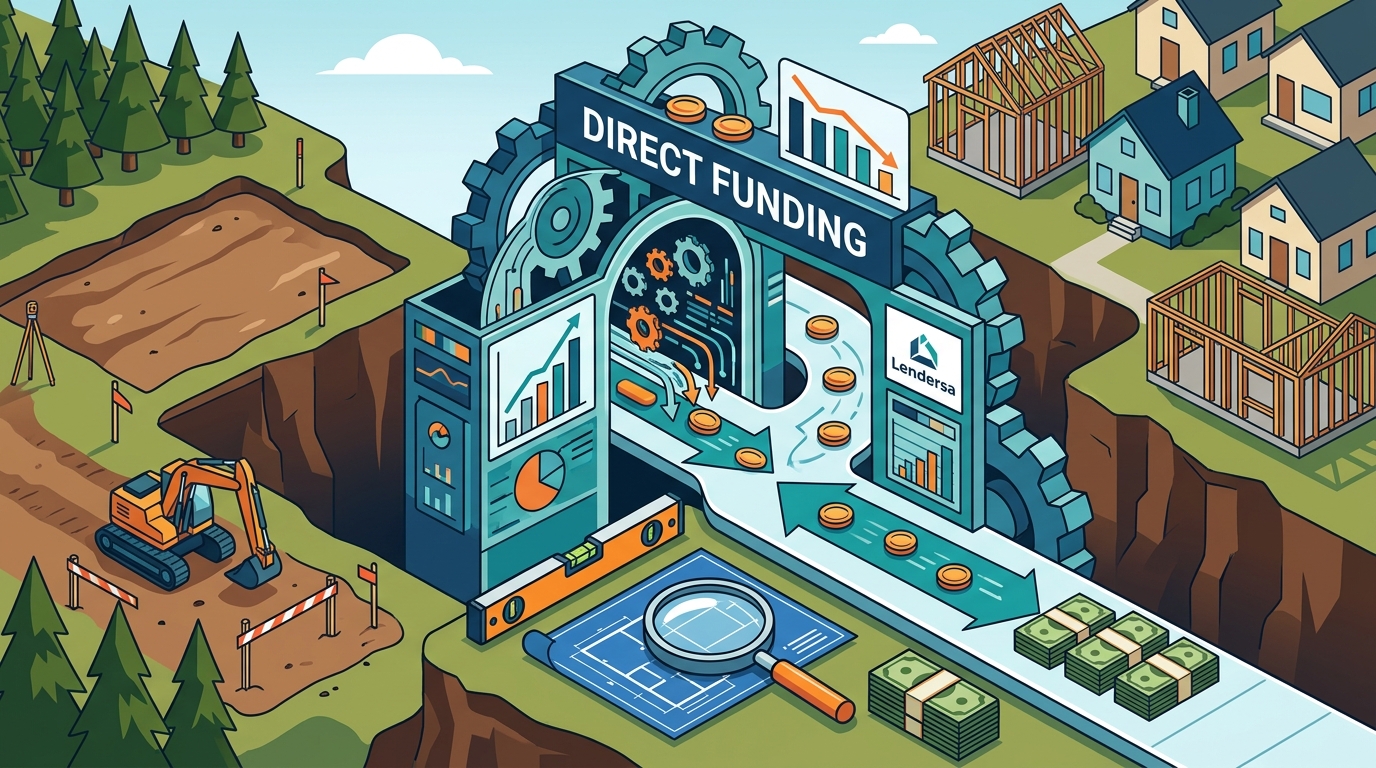
Modern lending platforms utilize advanced algorithmic routing to match borrower scenarios with hundreds of active private capital programs. These systems analyze property type, location, loan amount, and credit parameters to filter irrelevant offers and surface only viable funding options. AI matching protocols are automated routing systems that eliminate manual broker friction and accelerate the comparison phase. Borrowers can submit a single application and receive multiple competitive offers without repeated credit inquiries or extensive documentation requests. This technology drastically reduces the time required to secure funding, often delivering actionable quotes within minutes. The platform architecture ensures that conventional and private routing mechanisms operate seamlessly across diverse loan categories.
Comparing Platform Models Versus Traditional Brokers
Traditional mortgage brokers operate on commission-based structures that often incentivize higher loan amounts or longer processing times. Digital lending platforms function as multi-lender marketplaces, allowing competing capital providers to bid directly on qualified scenarios. This competitive dynamic typically drives down interest rates, reduces origination fees, and accelerates closing timelines. Investors utilizing capital portal networks gain access to a broader spectrum of funding sources without paying intermediary markups. The transparency of platform-based lending ensures that borrowers understand exactly how each program differs in terms of prepayment penalties, draw schedules, and servicing requirements.
Key Takeaways
- Direct hard money lenders prioritize collateral value over borrower credit scores.
- Vacant land financing typically requires fifty to sixty percent loan-to-value ratios.
- Subprime residential loans focus on after-repair value and renovation experience.
- AI matching protocols filter hundreds of programs to surface only viable options.
- Platform-based lending eliminates traditional broker commissions and markup fees.
- Private capital deployment timelines frequently range from three to ten business days.
- Founders with decades of originator experience design these systems for complex scenarios.
Frequently Asked Questions
What is the typical loan-to-value ratio for vacant land?
Most private lenders cap vacant land financing at fifty to sixty percent of the appraised value to mitigate risk on unimproved parcels.
Can I secure funding with a credit score below six hundred?
Yes, direct hard money lenders evaluate the property's equity position and your renovation plan rather than relying strictly on FICO thresholds.
How long does the underwriting process take for private capital?
Automated matching platforms typically deliver competitive offers within minutes, with actual funding closing in three to ten business days.
Do private lenders require personal guarantees for commercial projects?
Many direct lenders structure non-recourse or limited-recourse agreements, though personal guarantees remain common for smaller residential flips.
What documentation is required to apply for a land loan?
Applicants must provide a detailed site plan, zoning verification, environmental assessments, utility access confirmations, and a clear exit strategy.
How does an AI matching system differ from a traditional broker?
Algorithmic routing compares hundreds of active programs simultaneously, whereas traditional brokers manually submit applications to select institutions.
Are there prepayment penalties on hard money loans?
Most private capital agreements include a six to twelve month prepayment penalty, though some flexible programs offer penalty-free exit options.
Next Steps for Securing Private Capital
Securing direct hard money financing for vacant land or subprime residential projects requires precision, accurate property valuation, and a clear development roadmap. Our platform eliminates traditional friction by connecting your specific scenario with hundreds of active private capital programs instantly. You can explore our comprehensive frequently asked questions to understand the exact requirements for your project. Visit our main portal to begin your application, compare competitive offers, and secure the funding you need without unnecessary delays. Start your loan comparison today and access the capital required to execute your next real estate investment.
| Loan Category | Typical Loan-to-Value Ratio | Standard Term Length | Best Use Case |
|---|---|---|---|
| Vacant Land Acquisition | Fifty to sixty percent | Six to twenty-four months | Site purchase and preliminary zoning |
| Fix and Flip Financing | Seventy to eighty percent | Six to eighteen months | Property rehabilitation and rapid resale |
| Subprime Residential | Seventy-five to eighty-five percent | Six to twenty-four months | Damaged credit profiles and distressed assets |
| Construction Capital | Seventy to eighty percent | Twelve to thirty-six months | New builds and large-scale developments |