

Navigating the private lending market requires strict due diligence because industry data shows that nearly 38 percent of real estate investors encounter predatory financing terms during their first major acquisition. Loan scams thrive on information asymmetry and rushed decision making. You must verify licensing status, review fee structures, and demand transparent amortization schedules before signing any commitment. This guide breaks down the exact verification steps required to separate regulated capital providers from unlicensed operators.
Verify Licensing and Regulatory Compliance
Check State Registration Requirements
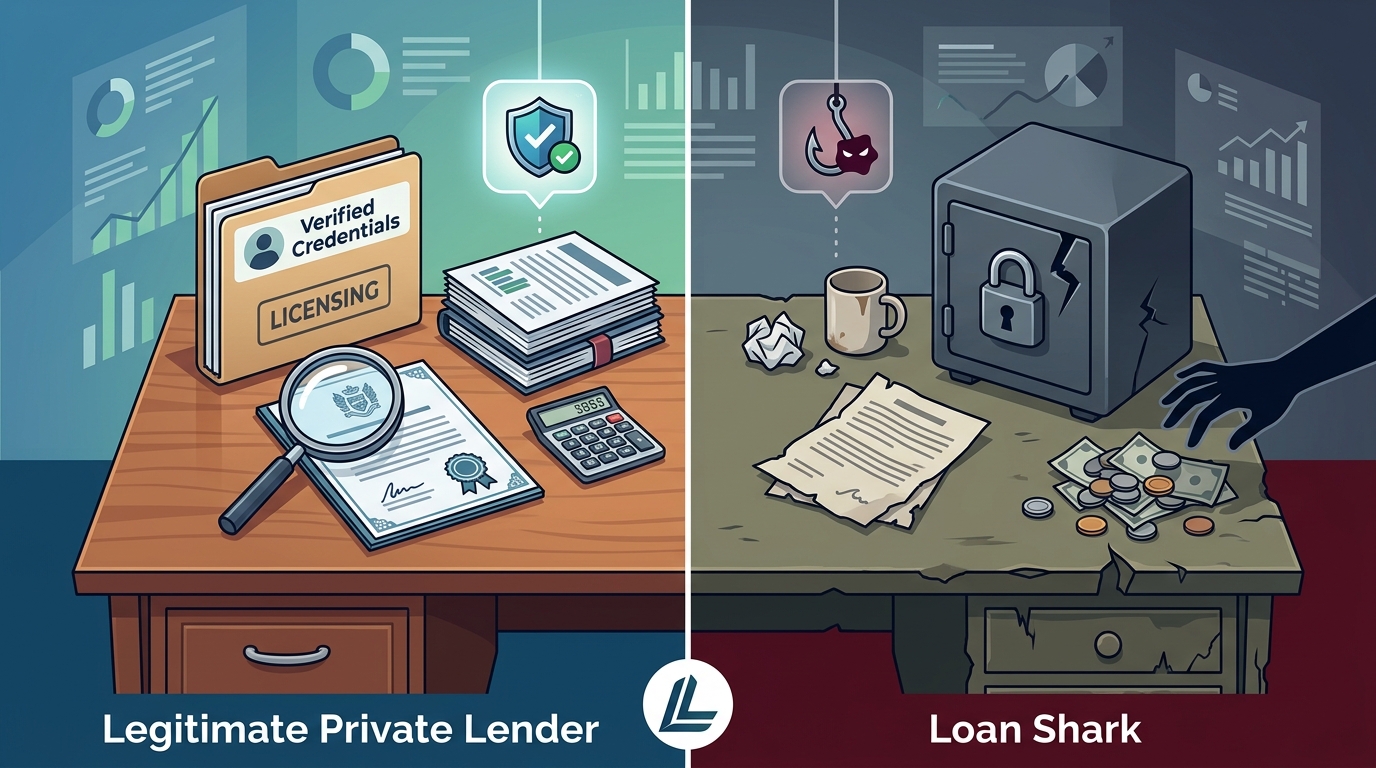
Every legitimate private lender must operate under state-specific lending licenses. Private lenders are subject to state usury laws and disclosure mandates. You should verify their registration through your state financial regulator database. Unlicensed operators frequently skip background checks and avoid standard compliance audits.
Confirm NMLS Credentials
The Nationwide Multistate Licensing System tracks every authorized mortgage originator. NMLS records provide instant access to complaint histories and disciplinary actions. Legitimate providers maintain active credentials without unexplained gaps. You can cross-reference their business entity against federal consumer protection databases to confirm operational legitimacy.
Audit Fee Structures and Prepayment Penalties
Identify Hidden Origination Charges
A hard money loan is a short-term financing instrument secured by real estate collateral rather than borrower credit scores. Legitimate providers disclose all origination points upfront. Predatory operators bury excessive points inside closing cost estimates. You must calculate the total cost of capital before accepting any term sheet.
Review Prepayment Penalty Clauses
Standard industry practice allows borrowers to refinance without severe penalties after a brief lock period. Hard money loans typically enforce a six-month penalty window to protect lender yield. Excessive penalty structures that extend beyond twelve months indicate aggressive capital extraction. You should reject any agreement that restricts early refinancing without clear justification.
Evaluate Communication and Documentation Standards
Assess Underwriting Transparency
Professional lenders provide clear underwriting criteria before requesting sensitive financial documents. Borrowers should never hand over tax returns or bank statements before reviewing loan programs. Legitimate operations utilize secure portals and encrypted data transmission. Unverified operators frequently request excessive documentation without explaining the purpose.
Monitor Response Times and Professionalism
Reliable capital providers maintain dedicated underwriting teams that respond within forty-eight hours. Delayed communication often signals disorganized operations or unqualified staff. You should request a direct contact number for your assigned loan officer. Professional lenders maintain consistent communication channels throughout the entire funding cycle.
Check Collateral Terms and Foreclosure Rights
Analyze Loan-to-Value Ratios
A bridge loan is a temporary financing solution designed to cover the gap between property acquisition and long-term refinancing. Reputable lenders cap loan-to-value ratios at sixty-five percent for fix-and-flip projects. Excessive leverage ratios that exceed seventy-five percent drastically increase default risk. You must verify that the lender maintains adequate equity cushions to protect both parties.
Review Foreclosure and Default Procedures
Standard default protocols require written notices and cure periods before initiating foreclosure. Conventional and private loan routing platforms enforce strict compliance timelines to prevent predatory asset seizure. You should demand clear default timelines and dispute resolution mechanisms. Legitimate providers prioritize loan modification over immediate asset liquidation.
Leverage AI Matching and Multi-Lender Protocols
Utilize Automated Program Comparison
Modern lending platforms deploy artificial intelligence to scan hundreds of capital programs simultaneously. Lendersa utilizes proprietary algorithms to match your specific property scenario with verified hard money lenders. This automated comparison eliminates manual outreach delays and reduces exposure to unvetted operators. You gain instant access to competing offers without sharing sensitive identification data.
Access B2B Capital Networks
Professional real estate investors benefit from dedicated capital portals that connect them with institutional-grade lenders. Capital portal networks enforce strict lender onboarding standards to maintain market integrity. You should utilize these verified ecosystems to bypass unregulated brokers. Direct lender access ensures transparent pricing and faster closing timelines.
| Verification Metric | Legitimate Private Lender | Predatory Loan Shark |
|---|---|---|
| State Licensing Status | Active and verifiable | Missing or expired credentials |
| Origination Fee Disclosure | Transparent point breakdown | Buried in closing costs |
| Prepayment Penalty Window | Six to twelve months | Excessive or unlimited duration |
| Loan-to-Value Cap | Sixty-five to seventy percent | Exceeds eighty percent |
| Default Cure Period | Written notice and thirty days | Immediate asset seizure threats |
Key Takeaways
- Industry data shows that 38 percent of real estate investors encounter predatory financing terms during their first major acquisition.
- Legitimate private lenders maintain active state licenses and transparent NMLS credentials without unexplained gaps.
- Standard hard money loan programs cap loan-to-value ratios at sixty-five percent for fix-and-flip projects.
- Bridge loan structures typically enforce a six-month prepayment penalty window to protect lender yield.
- Professional capital providers utilize secure portals and encrypted data transmission to protect borrower information.
- AI matching protocols scan hundreds of verified programs to eliminate manual outreach delays and unvetted operators.
Frequently Asked Questions
How do I verify if a private lender holds a valid state license?
You can verify licensing status by searching your state financial regulator database and cross-referencing the Nationwide Multistate Licensing System. Legitimate providers maintain active credentials without unexplained gaps.
What is the standard loan-to-value ratio for fix-and-flip projects?
A hard money loan is a short-term financing instrument secured by real estate collateral rather than borrower credit scores. Reputable lenders typically cap loan-to-value ratios at sixty-five percent to maintain adequate equity cushions.
How long should a prepayment penalty last on a private loan?
Standard industry practice allows borrowers to refinance without severe penalties after a brief lock period. Hard money loans typically enforce a six-month penalty window to protect lender yield.
What documentation should I expect from a legitimate private lender?
Professional lenders provide clear underwriting criteria before requesting sensitive financial documents. You should never hand over tax returns or bank statements before reviewing loan programs.
How can I avoid predatory lenders when searching for capital?
You should utilize verified capital portals and AI matching platforms that enforce strict lender onboarding standards. Direct lender access ensures transparent pricing and faster closing timelines.
What happens if I default on a private real estate loan?
Standard default protocols require written notices and cure periods before initiating foreclosure. Legitimate providers prioritize loan modification over immediate asset liquidation.
Can I refinance a private loan before the penalty period expires?
You can refinance without penalties after the lock period expires by securing new financing. Excessive penalty structures that extend beyond twelve months indicate aggressive capital extraction.
Secure Verified Capital Through Our Multi-Lender Protocol
Stop guessing which private lender operates within regulatory guidelines. Our proprietary AI matching engine instantly compares hundreds of verified hard money programs to find your optimal financing structure. Start your loan application today and experience transparent pricing with zero social security number requirements. Visit our contact page to schedule a direct consultation with our underwriting team.