

Private lending has evolved from a niche alternative into a cornerstone of modern real estate finance, yet the lack of uniform regulation creates significant risks for borrowers. According to the Consumer Financial Protection Bureau, predatory lending practices cost American consumers billions annually, with hard money and private loans being particularly susceptible to exploitation due to their speed and flexibility. Understanding the distinction between a regulated financial partner and a predatory lender is not just about avoiding high interest rates; it is about protecting your asset and your financial future from illegal usury and fraudulent practices.
Understanding Private Lending and Its Role
Private lending, often referred to as hard money lending, involves non-bank institutions or individual investors providing capital for real estate transactions. Unlike conventional mortgages, which rely heavily on credit scores and income verification, private lenders focus primarily on the collateral value of the property. This asset-based underwriting allows for faster closings and greater flexibility, making it ideal for fix-and-flip projects, construction loans, or borrowers with complex financial profiles.
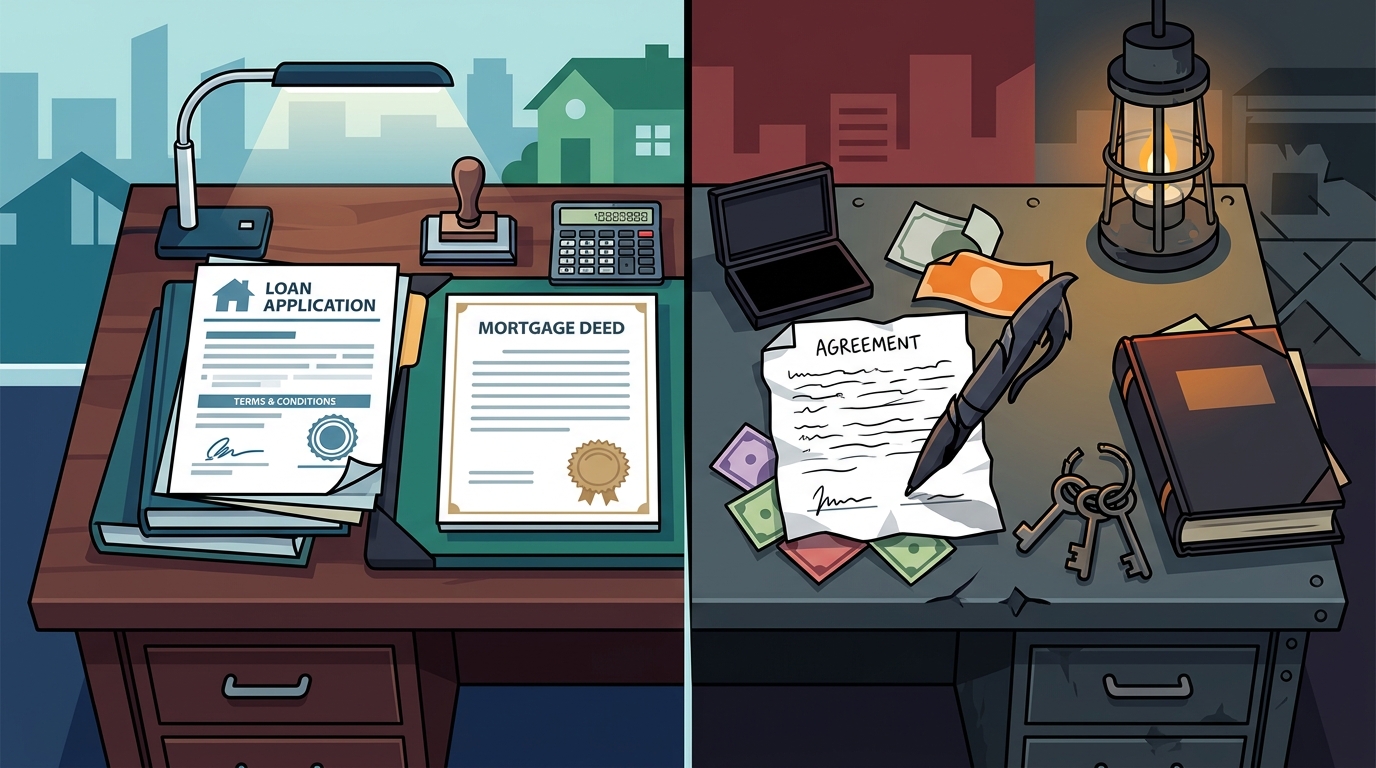
However, this flexibility comes with a trade-off. Private loans typically carry higher interest rates and shorter terms than traditional bank loans. Because the risk is higher for the lender, the borrower must ensure they are dealing with a legitimate entity. A legitimate private lender operates within state and federal regulations, providing transparent terms and professional documentation. In contrast, a loan shark or predatory lender exploits the borrower's urgency, hiding fees in fine print and threatening legal or physical intimidation.
The rise of fintech platforms has introduced new layers of verification and transparency to this market. Platforms like Lendersa utilize artificial intelligence to match borrowers with vetted lenders, reducing the risk of encountering fraudulent operators. By automating the comparison process, these tools help borrowers identify legitimate programs based on clear, data-driven criteria rather than opaque promises.
Red Flags of Predatory Lenders
Identifying a loan shark or predatory lender requires vigilance. These actors often target borrowers who are in distress or have been rejected by traditional banks. They exploit fear and urgency to bypass rational decision-making. Below are the critical warning signs that indicate a lender is operating outside legal and ethical boundaries.
1. Upfront Fee Demands
One of the most common tactics used by fraudulent lenders is the demand for upfront fees before any loan approval or funding occurs. Legitimate lenders may charge application fees or credit report fees, but these are typically deducted from closing costs or paid only after a formal commitment is issued. If a lender insists on wire transfers or gift cards for "processing fees" before reviewing your property, it is a definitive sign of fraud.
2. Exorbitant Interest Rates and Points
While private loans are more expensive than conventional mortgages, there are legal limits on interest rates in many jurisdictions. Predatory lenders often charge rates that exceed usury laws, which are designed to protect borrowers from excessive costs. According to data from the Federal Reserve, private money loans typically range from 8% to 15% in interest, with points ranging from 1 to 3. Rates significantly above this range, especially when combined with hidden fees, suggest predatory intent.
3. Pressure to Sign Quickly
Legitimate lenders understand that real estate transactions require due diligence. They provide ample time for borrowers to review loan estimates, title reports, and legal documents. Predatory lenders, however, create artificial urgency. They may claim that the offer is only valid for a few hours or that funds are "waiting" for you. This pressure tactic is designed to prevent you from seeking legal advice or comparing other offers.
4. Lack of Transparency in Terms
A legitimate lender provides a Loan Estimate within three business days of receiving your application, as required by the Truth in Lending Act (TILA). This document outlines the interest rate, monthly payments, and closing costs in detail. If a lender refuses to provide written terms or uses vague language to describe fees, you are likely dealing with an unregulated operator.
The Verification Process for Legitimacy
Before committing to a private lender, you must conduct thorough due diligence. This process involves verifying their licensing, reviewing their track record, and ensuring they adhere to regulatory standards. The following steps will help you confirm that a lender is legitimate.
Check State Licensing
In the United States, private lenders must be licensed in the state where the property is located. You can verify a lender's license through your state's Department of Financial Institutions or the Nationwide Multistate Licensing System & Registry (NMLS). If a lender cannot provide their NMLS ID or refuses to share it, do not proceed with the transaction.
Review Online Reputation and Complaints
Search for the lender's name along with keywords like "scam," "fraud," or "complaint." Check the Better Business Bureau (BBB) and the Consumer Financial Protection Bureau (CFPB) database for unresolved issues. A legitimate lender will have a history of positive reviews and a clear process for addressing customer concerns.
Consult a Real Estate Attorney
Never sign a private loan agreement without having it reviewed by a qualified real estate attorney. An attorney can identify unfavorable clauses, such as personal guarantees, cross-collateralization, or prepayment penalties that are not standard in the industry. This step is crucial for protecting your personal assets from being seized in the event of a default.
The Lendersa Ecosystem and AI Matching
At Lendersa, we have built a proprietary ecosystem designed to eliminate the guesswork and risk associated with private lending. Our platform leverages advanced AI to instantly match your loan scenario with hundreds of vetted hard money lenders, private money lenders, and banks. This multi-lender protocol ensures that you are not reliant on a single source of capital, but rather a competitive marketplace of legitimate options.
Our Borrowers portal provides access to tools like LoanImprove™ and LoanScore™, which help you understand your eligibility and optimize your profile before applying. By using our platform, you gain access to a network of lenders who are required to adhere to strict transparency standards. Our Conventional and Private Loan Routing system ensures that your data is shared only with qualified lenders who have expressed interest in your specific property type and financial profile.
We also offer a B2B Capital Portal for lenders and brokers, fostering a community of professional participants. This ecosystem reduces the likelihood of encountering loan sharks by creating a barrier to entry that requires licensing, verification, and professional conduct. Our founder, Moshon Reuveni, brings over 35 years of experience in loan origination to the platform, ensuring that our technology is grounded in real-world lending practices.
Comparison: Legitimate vs. Predatory Lenders
To help you quickly identify the differences between a legitimate private lender and a predatory operator, we have compiled the following comparison table. This summary highlights the key operational and ethical distinctions.
| Feature | Legitimate Private Lender | Predatory Lender / Loan Shark |
|---|---|---|
| Licensing | Registered with state and federal authorities (NMLS) | Unlicensed or uses fake credentials |
| Transparency | Provides Loan Estimate within 3 days | Refuses written terms or uses vague language |
| Fees | Clear disclosure of all costs; no upfront wire demands | Demands upfront fees via gift cards or crypto |
| Interest Rates | Within market norms (8-15% typically) | Exorbitant rates exceeding usury laws |
| Communication | Professional, patient, and responsive | High-pressure tactics and threats |
| Legal Review | Encourages attorney review of documents | Discourages or forbids legal consultation |
Key Takeaways
- Verify Licensing: Always check a lender's NMLS ID and state registration before engaging in any financial discussions.
- Watch for Upfront Fees: Legitimate lenders do not require large upfront payments via untraceable methods like gift cards.
- Demand Transparency: A Loan Estimate is a legal requirement for most mortgage products; refusal to provide one is a major red flag.
- Use AI Matching: Platforms like Lendersa use AI to connect you with vetted lenders, reducing the risk of fraud.
- Consult Professionals: Have a real estate attorney review all loan documents to identify hidden clauses and personal guarantees.
- Understand Market Rates: Know the typical interest rate range for private loans to identify predatory pricing immediately.
- Avoid Pressure: Legitimate lenders allow time for due diligence; urgency is a common tactic of loan sharks.
Frequently Asked Questions
What is the difference between a hard money lender and a private lender?
Hard money lending is a subset of private lending. Hard money loans are specifically secured by real estate collateral and are typically used for short-term investment properties. Private lending is a broader term that includes any non-bank lending, which can also include personal loans or business loans secured by assets other than real estate.
How can I report a predatory lender?
If you suspect you are dealing with a loan shark or predatory lender, you should report them to your state's Attorney General, the Consumer Financial Protection Bureau (CFPB), and the Federal Trade Commission (FTC). You can also file a complaint with the Better Business Bureau if the lender claims to be a legitimate business.
Are private loans regulated?
Yes, private loans are regulated at both the state and federal levels. Lenders must adhere to usury laws, which cap interest rates, and must follow disclosure requirements under the Truth in Lending Act. However, enforcement can vary by state, making it crucial for borrowers to verify their lender's compliance.
What is the typical cost of a private loan?
Private loans typically cost between 8% and 15% in interest, with origination points ranging from 1 to 3. These costs are higher than conventional mortgages due to the increased risk and speed of funding, but they should be transparently disclosed in the Loan Estimate.
Can I refinance a private loan?
Yes, many borrowers refinance private loans into conventional mortgages once the property is stabilized or improved. However, you must check for prepayment penalties in your original loan agreement, as some private lenders charge fees for early payoff.
What is Lendersa's role in preventing fraud?
Lendersa uses AI to vet and match borrowers with a network of licensed and verified lenders. Our platform requires lenders to provide accurate information and adhere to transparency standards, reducing the risk of borrowers encountering fraudulent operators.
How long does it take to get a private loan?
Private loans can close in as little as 7 to 14 days, compared to 30 to 45 days for conventional mortgages. This speed is due to the asset-based underwriting process, which focuses on the property value rather than the borrower's credit history.
Start Your Secure Loan Journey
Protecting your financial future starts with choosing the right lender. Do not leave your real estate investment to chance or rely on unverified contacts. Use the power of AI to compare offers from hundreds of legitimate lenders instantly. Visit Lendersa.com today to explore our Borrowers portal and discover how our Conventional and Private Loan Routing can help you find the best hard money or bank loan in minutes. Your secure financing journey begins with a single, informed step.