

Securing capital for unconventional real estate assets requires navigating a complex landscape of private capital. According to recent industry data, hard money lending volumes have surged past $100 billion annually, with a significant portion dedicated to non-traditional collateral like vacant land and distressed residential properties. This growth reflects a critical gap in traditional banking, where rigid underwriting standards often exclude borrowers with unique property types or imperfect credit histories. Finding the right direct lender is not about luck; it is about understanding the specific risk models that private capital providers use to evaluate these high-risk scenarios. (Get Answers For Hard)
Understanding Hard Money Lending for Niche Assets
Hard money lending is a specialized form of asset-based lending where the loan is secured by the value of the real estate collateral rather than the borrower's creditworthiness. Hard money lending is a financing method where private investors or companies provide short-term loans based primarily on the equity in the property. This distinction is vital for borrowers with vacant land or subprime credit profiles, as traditional banks often reject these applications due to perceived risk.
For vacant land, the challenge lies in the lack of income-generating potential. Lenders must rely entirely on the future value of the land after development. For subprime residential loans, the focus shifts to the property's after-repair value (ARV) and the borrower's exit strategy. Understanding these mechanics allows you to approach lenders with a compelling, data-driven proposal rather than a generic application.
Strategies for Vacant Land Financing
Finding direct hard money lenders for vacant land requires targeting specific types of private capital providers. Not all hard money lenders are equipped to handle raw land. Some specialize in construction loans, while others focus on fix-and-flip properties. Vacant land loans typically come with higher interest rates and lower loan-to-value (LTV) ratios, often ranging from 50% to 65% of the appraised value.
Identifying the Right Lender Profile
You must look for lenders who specialize in land acquisition and development loans. These lenders understand the unique risks associated with raw land, such as zoning restrictions, environmental issues, and utility access. They are more likely to offer flexible terms that align with your development timeline.
Preparing Your Land Package
To secure financing, you need a robust land package. This includes a detailed site plan, zoning verification, and a realistic development budget. Lenders will scrutinize these documents to ensure the project is viable. According to market analysis, borrowers who present comprehensive development plans are 30% more likely to secure favorable terms from private lenders.
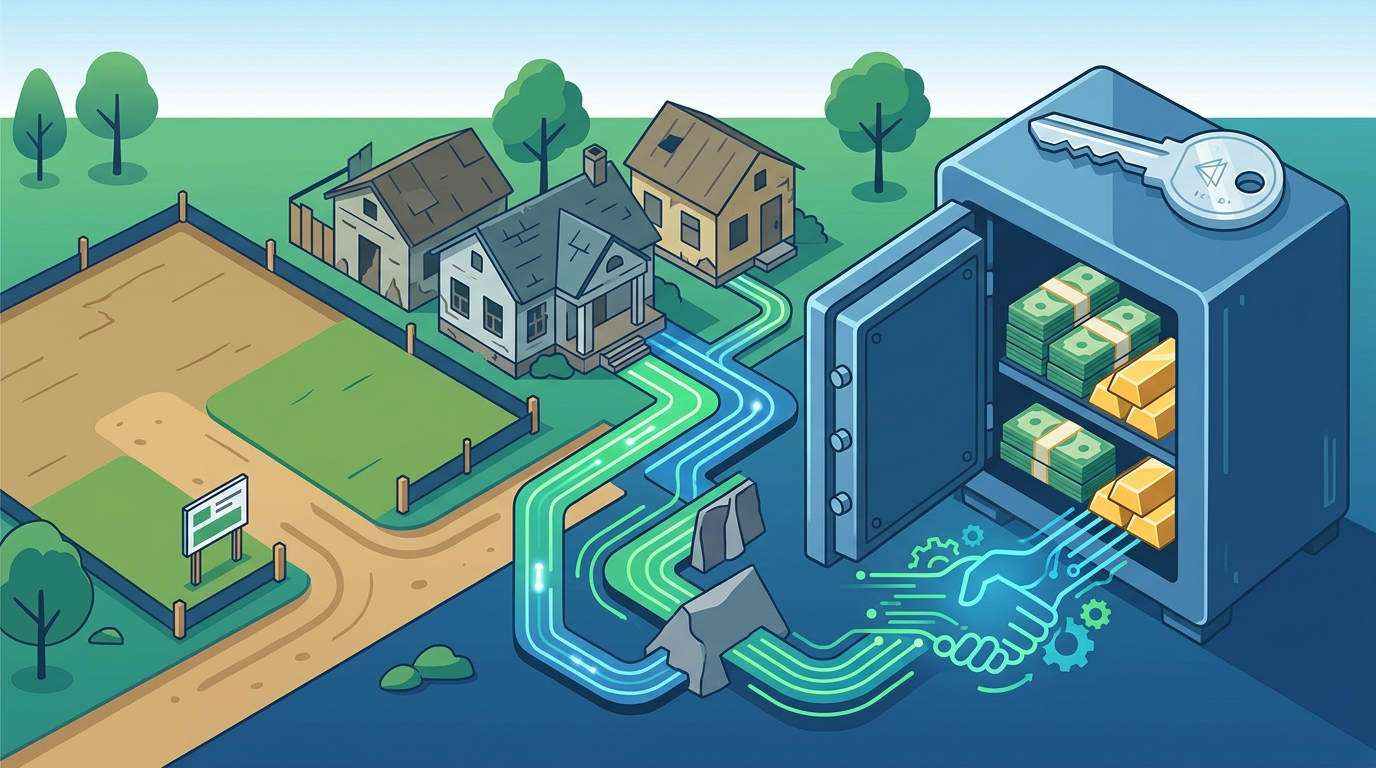
Navigating Subprime Residential Loans
Subprime residential loans cater to borrowers with lower credit scores or limited credit history. These loans are often used for investment properties or primary residences that do not meet conventional lending criteria. Subprime lending is a financial service that provides loans to individuals with poor credit histories, typically at higher interest rates to offset risk. For real estate investors, this can be a crucial tool for acquiring properties that others cannot finance.
Credit Score Expectations
While traditional lenders often require credit scores above 620, hard money lenders for subprime loans may accept scores as low as 500 to 580. However, this comes with a trade-off. Higher risk translates to higher costs. Interest rates can range from 8% to 15% or more, depending on the borrower's profile and the property's condition.
Focus on Asset Value
In the subprime space, the property's value becomes the primary underwriting factor. Lenders will conduct a thorough appraisal to determine the ARV. If the property is distressed, they may use a comparative market analysis (CMA) rather than a full appraisal. This process is faster and allows for quicker funding, which is essential in competitive real estate markets.
Direct Lenders vs. Broker Networks
When searching for capital, you have two primary paths: working with a direct lender or using a broker network. Each has distinct advantages and disadvantages depending on your specific needs.
| Feature | Direct Hard Money Lenders | Broker Networks |
|---|---|---|
| Speed of Funding | Fast (Days to Weeks) | Variable (Depends on Network) |
| Cost & Fees | Lower (No Broker Fees) | Higher (Broker Fees Added) |
| Flexibility | High (Direct Negotiation) | Medium (Program Constraints) |
| Access to Capital | Limited to One Source | Wide (Multiple Lenders) |
Direct lenders offer transparency and potentially lower costs because you avoid intermediary fees. However, finding them can be time-consuming. Broker networks, like the one facilitated by Lendersa, provide access to a vast array of capital sources, including hard money lenders, private money lenders, and banks. This comparison is essential for borrowers who need to balance speed against cost.
The Lendersa AI Advantage
Lendersa revolutionizes the search for direct hard money lenders by leveraging advanced AI to match your loan scenario with hundreds of potential lenders. This technology eliminates the need for manual searching and reduces the friction associated with traditional lending processes.
AI-Powered Matching
Our proprietary AI tools analyze your specific loan requirements, including property type, credit profile, and desired loan amount. The system then instantly matches you with lenders who have active programs for vacant land or subprime residential loans. This process ensures that you are not wasting time with lenders who cannot fund your deal.
No Social Security Number Required
One of the significant benefits of using Lendersa is the ability to view hard money offers without providing your Social Security Number initially. This protects your privacy and allows you to compare offers from multiple lenders before committing to a full application. This feature is particularly valuable for investors who are sensitive to credit inquiries.
Proprietary Tools for Borrowers
Lendersa offers tools like LoanImprove™ and LoanScore™ to help borrowers understand their eligibility and optimize their profiles. These tools provide actionable insights that can improve your chances of approval and secure better terms. By using these resources, you can approach lenders with confidence and clarity.
Key Takeaways
- Hard Money Lending Growth: The hard money lending market has exceeded $100 billion in annual volume, driven by demand for non-traditional assets.
- Vacant Land LTV: Lenders typically offer 50% to 65% LTV for vacant land, requiring significant borrower equity.
- Subprime Credit Thresholds: Subprime hard money loans can accommodate credit scores as low as 500, focusing on asset value over credit history.
- Direct vs. Broker Costs: Direct lenders often offer lower overall costs by eliminating broker fees, but brokers provide wider access to capital.
- Lendersa's AI Matching: The platform uses AI to instantly match borrowers with hundreds of lenders, streamlining the search process.
- Privacy Protection: Lendersa allows users to view offers without submitting a Social Security Number, protecting personal data.
- Founder Expertise: Lendersa was founded by Moshon Reuveni, leveraging over 35 years of experience in loan origination to build a more efficient lending ecosystem.
Frequently Asked Questions
Can I get a hard money loan for vacant land?
Yes, many private lenders specialize in vacant land loans. However, these loans typically come with higher interest rates and lower loan-to-value ratios compared to construction or fix-and-flip loans. You must demonstrate a clear development plan to secure funding.
What credit score is needed for subprime residential loans?
Subprime residential hard money loans can be obtained with credit scores as low as 500. Lenders focus more on the property's value and your exit strategy than your credit history. However, lower credit scores may result in higher interest rates and points.
How does Lendersa find direct lenders?
Lendersa uses advanced AI algorithms to scan and match your loan profile with hundreds of hard money lenders, private money lenders, and banks. The system evaluates your specific criteria, such as property type and loan amount, to identify the best-fit lenders instantly.
Do I need to provide my Social Security Number to start?
No, Lendersa allows you to view hard money offers and compare lenders without providing your Social Security Number initially. This protects your privacy while you explore your options. You only need to provide sensitive information when you are ready to apply with a specific lender.
What is the difference between a hard money lender and a bank?
Hard money lenders are private individuals or companies that provide short-term loans based on property value. Banks are traditional financial institutions that offer longer-term loans based on borrower creditworthiness and income. Hard money loans are faster to fund but more expensive than bank loans.
How long does it take to close a hard money loan?
Hard money loans can close in as little as a few days to two weeks, depending on the lender and the complexity of the deal. This speed is a significant advantage over traditional bank loans, which can take 30 to 60 days to close.
What types of loans does Lendersa handle?
Lendersa handles a wide variety of loan types, including fix and flip loans, construction loans, conventional loans, FHA loans, USDA loans, VA loans, jumbo loans, small business loans, reverse mortgages, SBA loans, commercial loans, and non-QM loans.
Start Your Loan Search
Stop searching and let lenders compete for you. Whether you are looking for vacant land financing or subprime residential loans, Lendersa's AI technology can instantly match you with the best hard money lenders and private money lenders. Visit Lendersa today to explore your options and secure the capital you need for your real estate investment.