

Legitimate Private Lender vs Loan Shark: How to Spot the Red Flags
Securing capital for real estate or business ventures often requires looking beyond traditional banking channels. However, the private lending market is a complex ecosystem where legitimate capital providers coexist with predatory operators. According to the Consumer Financial Protection Bureau, predatory lending practices cost American consumers billions of dollars annually. Understanding the distinction between a professional hard money lender and a loan shark is critical for protecting your equity and your future. This guide details the operational, legal, and financial markers that separate legitimate capital from predatory traps. (Get Answers For Hard)
Understanding Private Lending Dynamics
Private lending, often referred to as hard money lending, is a form of asset-based lending where the loan is secured by real property. Unlike conventional mortgages that rely heavily on borrower income and credit scores, private lenders focus primarily on the value of the collateral and the exit strategy. This model allows for faster closings and more flexible underwriting criteria.
A legitimate private lender operates within a structured financial framework. They are typically registered entities that adhere to state and federal lending laws. Their business model relies on the interest income and points paid by borrowers, not on exploiting borrower desperation. For investors, these lenders provide the bridge capital needed for fix-and-flip projects or construction loans where traditional banks are too slow or rigid.
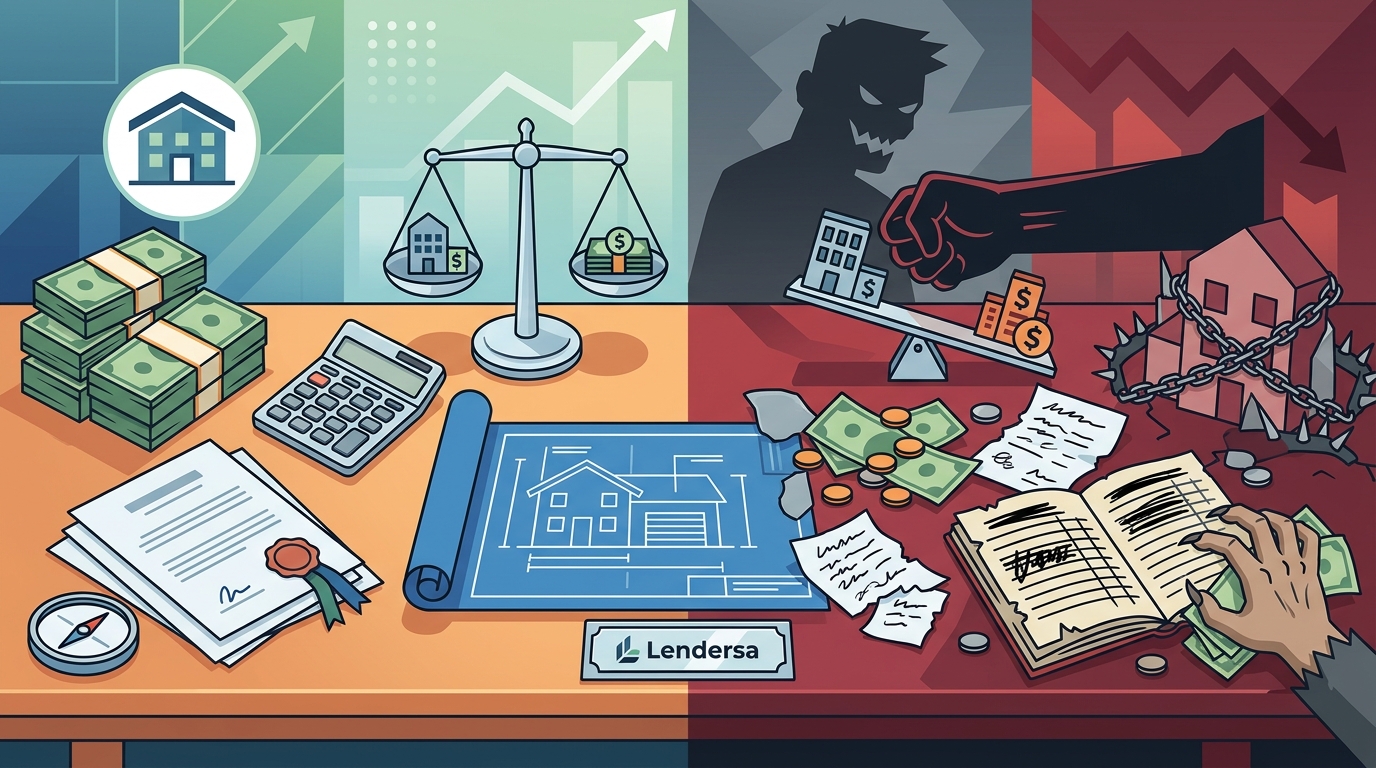
Conversely, a loan shark is an unregulated individual or entity that offers money at exorbitant interest rates, often without legal backing. These operators do not follow standard underwriting guidelines. Instead, they rely on fear, coercion, and opaque contract terms to extract maximum value from the borrower. The distinction lies in transparency, regulation, and the intent of the capital provider.
Red Flags of Predatory Practices
Identifying a loan shark requires vigilance. Predatory lenders often use high-pressure tactics and obscure terms to trap borrowers in cycles of debt. Here are the most common indicators of illegitimate lending operations.
1. Exorbitant Interest Rates and Fees
While private loans are more expensive than conventional mortgages, they have reasonable market rates. If a lender quotes an annual percentage rate (APR) that is significantly higher than the market average, it is a major warning sign. Legitimate hard money lenders typically charge interest rates between 8% and 15%, plus points. Loan sharks may charge rates that exceed 30% or even 100%, often structured in ways that are difficult to calculate until the loan is due.
According to data from the Investopedia, predatory loans often include hidden fees that are not disclosed in the initial offer. These can include excessive origination fees, prepayment penalties, and administrative costs that balloon the total cost of the loan.
2. Lack of Regulatory Compliance
Legitimate lenders are required to register with state regulatory bodies and comply with usury laws, which cap the maximum interest rate that can be charged. A loan shark operates outside these legal frameworks. They may not provide a clear loan agreement, or the agreement may contain clauses that are illegal in your jurisdiction.
Always verify the lender's license. In the United States, you can check a lender's registration through the NMLS Consumer Access portal. If a lender cannot provide their license number or refuses to do so, they are likely operating illegally.
3. Pressure Tactics and Urgency
Predatory lenders often create a false sense of urgency. They may claim that the offer is only valid for a few hours or that they have another borrower waiting. This pressure prevents you from doing due diligence. Legitimate lenders understand that real estate transactions take time and will give you reasonable periods to review the terms.
4. Equity Stripping and Asset Seizure
Loan sharks are often interested in the property itself rather than the repayment of the loan. They may structure loans with terms that make default almost inevitable, allowing them to seize the property at a fraction of its value. This practice, known as equity stripping, is a hallmark of predatory lending.
Legitimate lenders, on the other hand, want you to succeed. Their goal is to get paid back with interest. They will work with you to structure a loan that fits your exit strategy, whether that is selling the property or refinancing into a conventional mortgage.
Checklist for Legitimate Lenders
To ensure you are working with a legitimate private lender, use the following checklist. This process helps filter out bad actors and ensures you are getting the best possible terms.
- Transparent Terms: The lender provides a clear Loan Estimate and Closing Disclosure that outlines all costs, interest rates, and repayment schedules.
- Registered Entity: The lender is registered with state and federal regulatory agencies and can provide proof of licensing.
- Professional Communication: The lender communicates professionally and does not use high-pressure tactics or threats.
- Market-Rate Pricing: The interest rates and fees are within the standard range for private lending in your area.
- Clear Exit Strategy: The lender discusses your exit strategy and ensures the loan terms align with your plan.
Platforms like Lendersa help borrowers navigate this landscape by aggregating offers from multiple legitimate lenders. This allows you to compare terms side-by-side and identify the most competitive and transparent offers. By using a multi-lender protocol, you can avoid the pitfalls of dealing with a single, potentially predatory source.
Comparison: Legitimate vs. Predatory
The table below summarizes the key differences between legitimate private lenders and loan sharks. Use this as a quick reference guide when evaluating potential capital providers.
| Feature | Legitimate Private Lender | Loan Shark / Predatory Lender |
|---|---|---|
| Regulation | Registered and compliant with state/federal laws | Unregistered and operates outside legal frameworks |
| Interest Rates | Market-rate (typically 8-15% APR) | Exorbitant (often 30%+ APR or more) |
| Transparency | Clear Loan Estimates and Closing Disclosures | Opaque terms, hidden fees, and verbal agreements |
| Pressure Tactics | Professional and patient communication | High-pressure, urgent, and threatening |
| Exit Strategy | Aligns loan terms with borrower's plan | Structures loans to ensure default or asset seizure |
| Verification | Provides license number and proof of registration | Refuses to provide documentation or verification |
Key Takeaways
- Regulatory Verification: Always check a lender's license via the NMLS Consumer Access portal to ensure they are operating legally.
- Rate Awareness: Be wary of interest rates that significantly exceed the market average for hard money loans.
- Transparency is Key: Legitimate lenders provide clear, written documentation of all terms and fees before you sign anything.
- Pressure is a Red Flag: Any lender who pressures you to sign quickly is likely trying to hide unfavorable terms.
- Use Comparison Tools: Platforms like Lendersa allow you to compare multiple offers, making it easier to spot outliers and predatory pricing.
- Understand the Exit: Ensure the loan terms align with your realistic exit strategy, whether that is a sale or refinance.
- Legal Recourse: Working with a regulated lender ensures you have legal recourse if disputes arise, unlike dealing with a loan shark.
Frequently Asked Questions
What is the difference between a hard money lender and a loan shark?
A hard money lender is a regulated financial institution or individual that provides short-term loans secured by real estate. They operate within legal frameworks and charge market-rate interest. A loan shark is an unregulated operator who charges exorbitant rates and uses predatory tactics to exploit borrowers.
How can I verify if a private lender is licensed?
You can verify a lender's license by visiting the NMLS Consumer Access website and searching for their unique identifier. Legitimate lenders will have a valid license in the state where the property is located.
What are the typical interest rates for legitimate private loans?
Legitimate private loans typically have interest rates between 8% and 15%, depending on the market, loan-to-value ratio, and borrower profile. Rates significantly higher than this range may indicate predatory lending.
What should I do if I suspect a lender is a loan shark?
If you suspect a lender is a loan shark, stop all communication immediately. Report them to your state's attorney general or the Consumer Financial Protection Bureau. Do not sign any additional agreements or make any further payments.
Can I refinance a loan from a predatory lender?
Refinancing a loan from a predatory lender can be difficult due to the high costs and penalties involved. It is often better to negotiate with the lender to pay off the loan early or to seek legal advice on how to exit the agreement. Using a platform like Lendersa can help you find a new lender to pay off the existing debt with better terms.
Why do private lenders require higher interest rates than banks?
Private lenders charge higher rates because they take on more risk, offer faster closings, and have more flexible underwriting criteria. They are not bound by the same regulatory constraints as banks, which allows for speed but also requires higher compensation for the risk.
What is a Loan Estimate?
A Loan Estimate is a standardized form that lenders must provide to borrowers within three days of receiving a loan application. It details the loan terms, estimated monthly payments, and closing costs, allowing borrowers to compare offers from different lenders.
Secure Your Capital with Confidence
Protecting your financial future starts with choosing the right capital partner. By understanding the red flags of predatory lending and verifying the legitimacy of your lenders, you can secure the funds you need without falling victim to exploitation. Use advanced tools to compare offers and ensure you are getting the best possible terms.
Start your search for legitimate private capital today. Visit Lendersa.com to compare offers from hundreds of verified lenders and find the best loan for your needs.