

Finding direct hard money lenders for vacant land or subprime residential loans is notoriously difficult because traditional banks view these assets as high-risk. According to recent industry data, hard money loans account for a significant portion of non-bank lending, with many investors relying on private capital to secure properties that conventional lenders reject. This guide explains how to navigate this complex market, leveraging AI-driven matching protocols to connect with the right capital sources without the traditional friction. (Get Answers For Hard)
Understanding Hard Money Lending
Hard money lending is a specialized form of asset-based lending where the loan is secured by the value of the real estate property rather than the borrower's creditworthiness. This distinction is critical for investors who need speed and flexibility. Unlike conventional mortgages, which can take weeks or months to underwrite, hard money loans are designed for rapid closure, often within days. (About Lendersa 50 Years)
The primary advantage of this financing model is the focus on equity. Lenders evaluate the After Repair Value (ARV) or the current market value of the collateral. This allows borrowers with poor credit or complex financial situations to access capital. However, this convenience comes with higher interest rates and points, reflecting the increased risk taken by the lender. (Loan Types In Los)
For investors, understanding the mechanics of hard money is the first step toward successful deal financing. It requires a clear exit strategy, whether that is flipping the property, refinancing into a conventional loan, or holding it for rental income. The lender needs to see a viable path to repayment. (Compare Hard Money amp)
Challenges with Vacant Land Loans
Vacant land is one of the most challenging asset classes to finance. Banks are notoriously hesitant to lend on raw land because it generates no income and has lower liquidity than improved properties. If a borrower defaults, the bank faces a longer and more expensive foreclosure process to sell undeveloped land.
Consequently, vacant land loans typically require higher down payments, often ranging from 50% to 75% of the purchase price. The interest rates are also significantly higher than those for residential or commercial properties. Lenders view raw land as a speculative investment, which drives up the cost of capital.
However, opportunities exist for those who know where to look. Private lenders and hard money specialists are more willing to finance land if the borrower has a clear development plan. Providing detailed site plans, zoning approvals, and a realistic budget can improve your chances of securing funding. The key is to present the land not as an empty plot, but as a future asset with tangible value.
Navigating Subprime Residential Loans
Subprime residential loans cater to borrowers with lower credit scores or limited credit history. These loans are essential for first-time homebuyers or investors who have faced financial setbacks. The term "subprime" refers to the higher risk profile of the borrower, which is mitigated by the collateral's value and higher interest rates.
Finding a direct lender for subprime residential loans requires looking beyond traditional banks. Non-QM (Non-Qualified Mortgage) lenders have emerged as a major player in this space. They offer flexible underwriting guidelines that do not strictly adhere to government-sponsored enterprise (GSE) requirements. This flexibility allows for alternative documentation, such as bank statements or asset depletion, to verify income.
For borrowers with bad credit, the focus shifts to the loan-to-value (LTV) ratio. A lower LTV reduces the lender's risk, making them more willing to approve the loan. Investors often use hard money for subprime residential properties to acquire, renovate, and refinance. This strategy leverages the property's potential value rather than the borrower's current financial standing.
The Lendersa Multi-Lender Protocol
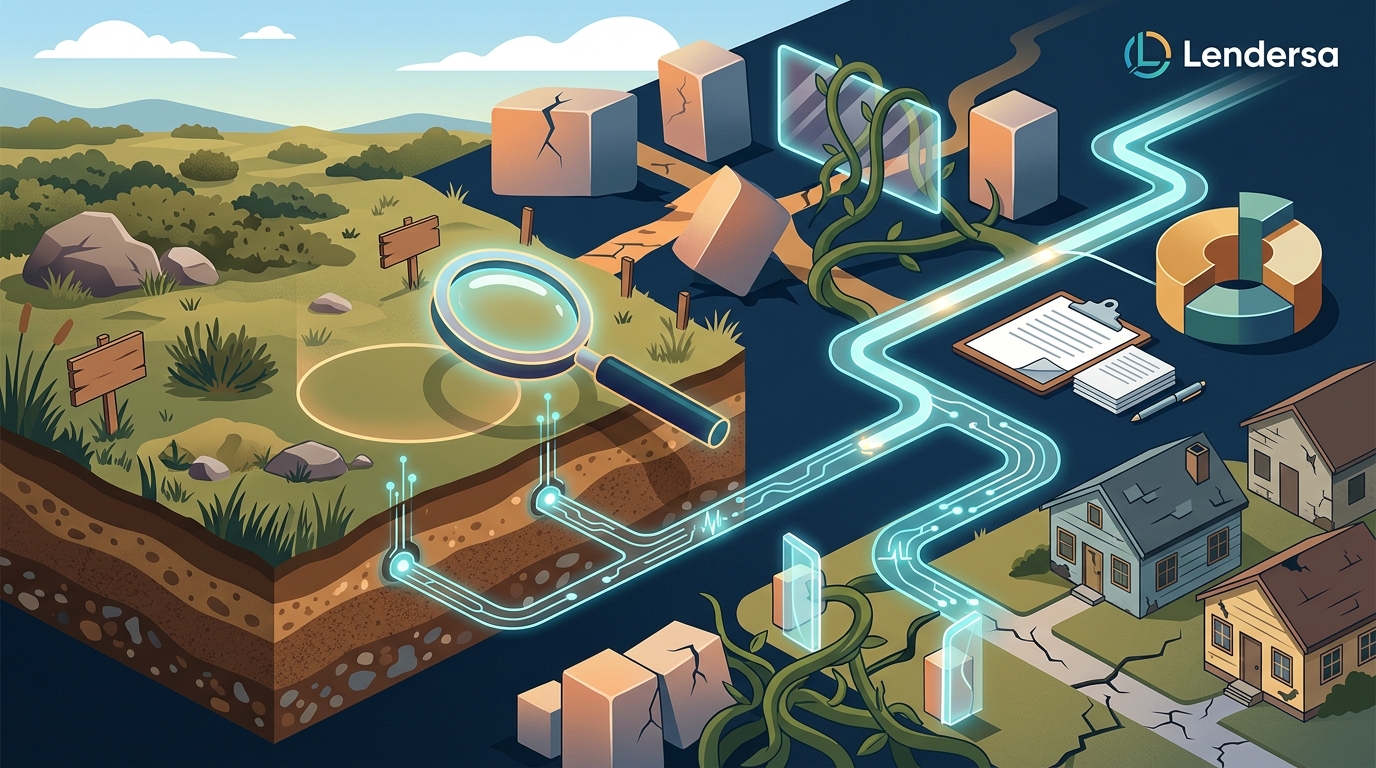
Manually searching for direct hard money lenders for vacant land or subprime residential loans is inefficient and time-consuming. The Lendersa platform utilizes an advanced AI matching protocol to streamline this process. Instead of contacting dozens of lenders individually, borrowers can submit their loan scenario once.
The Multi-Lender Protocol pits lenders against each other to negotiate the best terms. This competitive environment drives lenders to offer their most favorable rates and conditions to win your business. The AI evaluates hundreds of programs to identify the absolute best match for your specific property type and loan purpose.
This approach eliminates the need for a Social Security Number during the initial search phase, protecting your privacy while you explore options. The system sorts through lender matrices to find programs that align with your equity, credit profile, and timeline. By automating the comparison process, Lendersa ensures you receive offers from qualified hard money lenders, private investors, and banks.
The platform also offers proprietary tools like LoanScore™ and LoanImprove™ to help borrowers understand their positioning. These tools provide insights into how your loan might be perceived by lenders, allowing you to make strategic adjustments before applying. This proactive approach increases the likelihood of approval and better terms.
Loan Type Comparison
Understanding the differences between loan types is crucial for selecting the right financing. The table below summarizes the key characteristics of hard money, conventional, and private loans for vacant land and subprime residential properties.
| Loan Type | Best For | Credit Requirement | Speed of Funding | Typical LTV |
|---|---|---|---|---|
| Hard Money Loans | Fix and Flip, Vacant Land | Flexible / Asset-Based | Days | 50-70% |
| Conventional Loans | Primary Residences | Good to Excellent | 30-45 Days | Up to 97% |
| Private Money Loans | Investors with Equity | Variable | 1-2 Weeks | 60-80% |
| Non-QM Loans | Subprime Borrowers | Lower Credit Scores | 2-4 Weeks | 75-85% |
Key Takeaways
- Asset-Based Lending: Hard money lenders focus on the property's value, not just your credit score, making it ideal for subprime borrowers.
- Vacant Land Risks: Raw land loans require higher down payments (50-75%) and have stricter terms due to lower liquidity.
- AI Matching Efficiency: Using a platform like Lendersa allows you to compare hundreds of lender programs instantly without manual outreach.
- Competitive Negotiation: The Multi-Lender Protocol forces lenders to compete for your business, often resulting in lower rates and better terms.
- Privacy Protection: Initial searches on Lendersa do not require a Social Security Number, safeguarding your personal data.
- Founder Expertise: Lendersa was founded by Moshon Reuveni, a veteran with over 50 years of experience in real estate finance.
- Nationwide Coverage: The platform connects borrowers with capital across all 50 states, Canada, and Puerto Rico.
Frequently Asked Questions
Can I get a hard money loan for vacant land?
Yes, direct hard money lenders do finance vacant land, but they typically require a larger down payment, often between 50% and 75% of the purchase price. The loan terms are shorter, and interest rates are higher than conventional mortgages.
What is the minimum credit score for subprime residential loans?
Subprime residential loans, including Non-QM options, are designed for borrowers with lower credit scores. While requirements vary by lender, many accept scores in the 580-620 range, especially if the borrower has significant equity or strong cash reserves.
How does Lendersa find lenders for me?
Lendersa uses an AI-driven Multi-Lender Protocol to analyze your loan scenario and match it with hundreds of qualified hard money lenders, private investors, and banks. The system then pits these lenders against each other to negotiate the best terms for your specific needs.
Do I need to provide a Social Security Number to start?
No, you can view hard money offers or bank loans instantly on Lendersa without providing a Social Security Number. This allows you to explore your options and compare rates while maintaining your privacy.
What types of properties does Lendersa handle?
Lendersa handles a wide variety of property types, including residential, commercial, vacant land, and start-up construction. They also offer programs for fix and flip investors, bridge loans, and reverse mortgages.
How fast can I close a hard money loan?
Hard money loans are known for their speed. Depending on the lender and the complexity of the deal, closings can occur in as little as a few days to two weeks, significantly faster than conventional bank mortgages.
What is the LoanScore™ tool?
LoanScore™ is a proprietary tool by Lendersa that helps borrowers understand their loan positioning. It provides insights into how your financial profile and property details will be perceived by potential lenders, helping you prepare a stronger loan application.
Get Your Loan Offers
Stop searching and let lenders compete for you. Whether you are looking for vacant land financing or subprime residential loans, Lendersa connects you with the right capital sources. Click here to start your loan search and view offers from hundreds of lenders instantly. Secure the best terms for your investment today.