

Securing capital for a property purchase is rarely a linear process. According to recent industry analyses, the average time to secure a hard money loan has decreased significantly, with many investors closing in as little as five to seven days compared to the traditional 30 to 45-day mortgage timeline. This speed is not accidental; it is the result of a structural shift in how capital is allocated. Borrowers who rely solely on local banks often miss out on specialized private capital that could offer higher loan-to-value ratios or more flexible underwriting criteria. The modern real estate investor must understand that financing is a competitive marketplace, not a static menu of options. (Get Answers For Hard)
Understanding Financing Types
Before engaging with any lender, you must define the nature of your property and your exit strategy. Financing solutions are not one-size-fits-all. A conventional mortgage is designed for primary residences with strict income verification. In contrast, a hard money loan is a short-term, asset-based loan secured by real property. These loans are typically issued by private investors or companies and focus on the collateral value rather than the borrower's credit score. (About Lendersa 50 Years)
Another critical category is the bridge loan. A bridge loan is a short-term financing option used to secure a property before obtaining permanent financing. This is particularly useful for investors who need to close quickly on a foreclosure or auction property. The key distinction lies in the underwriting focus. Traditional banks look at your debt-to-income ratio. Private lenders look at the After Repair Value (ARV) of the property. Understanding this difference is the first step in finding the right capital partner. (Loan Types In Los)
The Multi-Lender Protocol
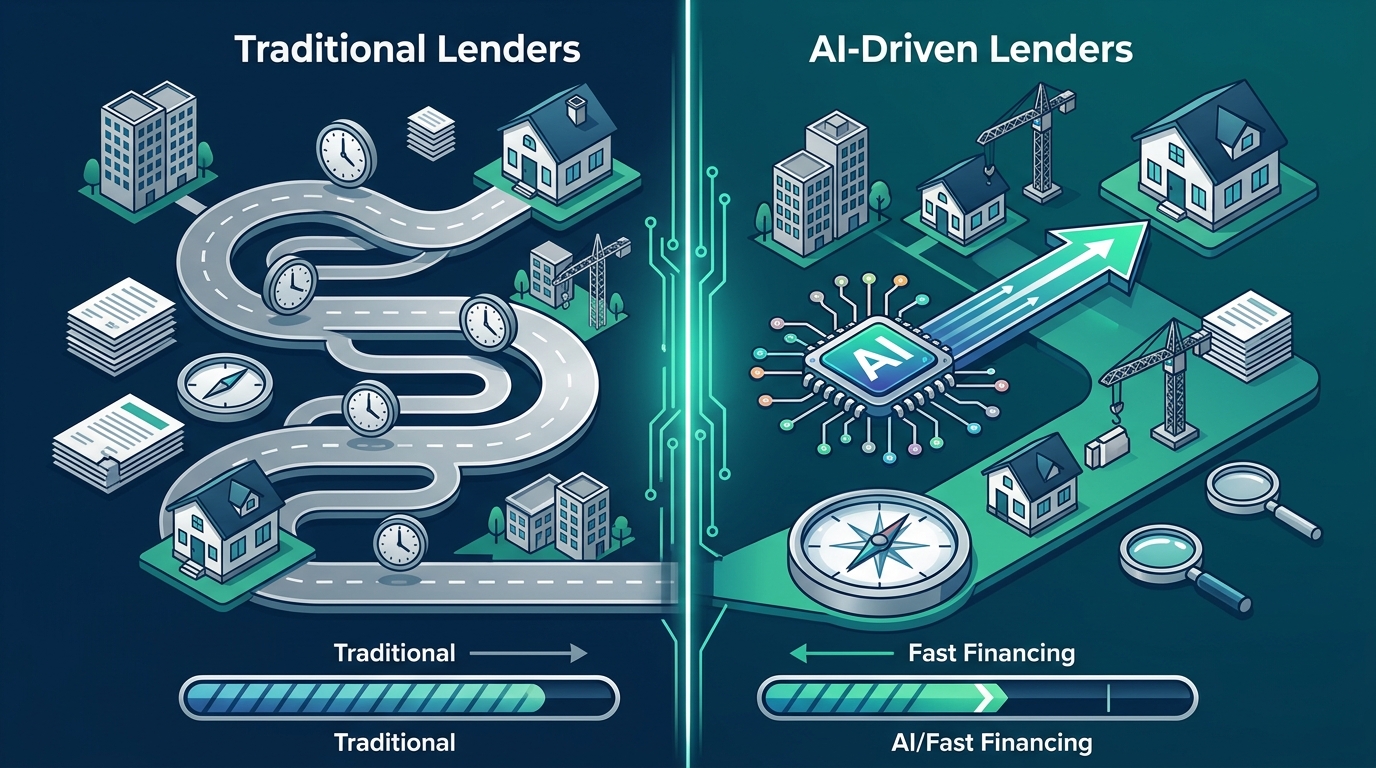
The traditional method of finding a loan involves calling one lender, waiting for a response, and then moving to the next. This approach is inefficient and leaves money on the table. The Multi-Lender Protocol changes this dynamic by creating a competitive bidding environment. Instead of you hunting for lenders, lenders compete for your business. (Compare Hard Money amp)
When you submit your loan scenario to a platform that utilizes this protocol, your request is distributed to a network of qualified capital sources. This includes big banks, credit unions, private investors, and hard money brokers. By presenting your loan request to multiple qualified lenders simultaneously, you create a competitive environment that drives them to offer their best terms to win your business. This process ensures that you are not locked into the first offer you receive, which is often inflated to account for the lack of competition.
This method is particularly effective for complex loan scenarios. If you have bad credit or no income documentation, traditional lenders may reject you immediately. However, private lenders are often more flexible, focusing on your equity and the property's potential. By using a platform that aggregates these diverse capital sources, you increase your chances of finding a lender who can accommodate your specific situation.
AI in Lending
Artificial Intelligence has transformed the lending landscape by automating the matching process. AI in lending refers to the use of machine learning algorithms to analyze borrower data and match it with the most suitable loan programs from a vast database. This technology allows for instant evaluation of thousands of lender matrices, identifying the absolute best programs for your specific property type and loan purpose.
The efficiency of AI is evident in the speed of results. While a human broker might take days to narrow down options, an AI system can evaluate hundreds of programs in minutes. This speed is crucial in real estate, where market conditions can change rapidly. For example, if you are bidding on a property at auction, you need financing decisions in hours, not days. AI enables this level of responsiveness by pre-screening lenders and filtering out those who do not meet your criteria.
Furthermore, AI tools like LoanScore™ and LoanImprove™ help borrowers understand their position before applying. These tools analyze your financial profile and provide actionable insights to improve your loan eligibility. This proactive approach saves time and reduces the frustration of repeated rejections. By leveraging these technologies, borrowers can navigate the complex lending market with greater confidence and precision.
Loan Types Comparison
Choosing the right loan type depends on your investment strategy, property condition, and financial profile. The table below summarizes the key differences between common financing options available through platforms like Lendersa.
| Loan Type | Best For | Closing Speed | Key Advantage |
|---|---|---|---|
| Hard Money Loans | Fix and Flip, Auctions | Days | Focus on equity, not credit |
| Conventional Loans | Primary Residences | 30-45 Days | Lowest interest rates |
| Construction Loans | New Builds, Major Renos | 2-4 Weeks | Disbursement based on progress |
| Bridge Loans | Temporary Financing | Days | Quick access to capital |
| SBA Loans | Small Business Real Estate | 30-60 Days | Government-backed security |
Each of these options serves a distinct purpose. Hard money loans are ideal for investors who need speed and flexibility. Conventional loans offer the lowest cost of capital for those who qualify. Construction loans are tailored for projects that require phased funding. Bridge loans provide a temporary solution while securing permanent financing. SBA loans offer government-backed security for small business owners. Understanding these distinctions allows you to match your financing to your strategy.
Key Takeaways
- Speed Matters: Hard money loans can close in days, compared to months for conventional loans.
- Equity Over Credit: Private lenders focus on the property's value, not just your credit score.
- Competition Drives Rates: Using a Multi-Lender Protocol ensures you get the best terms.
- AI Enhances Matching: Artificial intelligence can evaluate thousands of programs instantly.
- Diverse Capital Sources: Access to banks, credit unions, and private investors increases approval odds.
- Founder Expertise: Lendersa was founded by Moshon Reuveni, who has been active in lending since 1976.
- Nationwide Coverage: Services are available across all 50 states, Canada, and Puerto Rico.
Frequently Asked Questions
What is the difference between a hard money lender and a bank?
A hard money lender is a private investor or company that lends money based on the value of the collateral property. Banks are traditional financial institutions that lend based on the borrower's creditworthiness and income. Hard money loans are faster but more expensive than bank loans.
How fast can I get a hard money loan?
Hard money loans can close in as little as five to seven days. This speed is due to the simplified underwriting process and the focus on the property's value rather than extensive financial documentation.
Do I need a good credit score for a private loan?
Not necessarily. Private lenders focus primarily on the equity in the property and the After Repair Value (ARV). While credit score is a factor, it is not the sole determinant of approval. This makes private loans accessible to investors with less-than-perfect credit.
What is the Multi-Lender Protocol?
The Multi-Lender Protocol is a system that distributes your loan request to multiple qualified lenders simultaneously. This creates a competitive bidding environment, ensuring you receive the best possible terms and rates.
Can I use AI to compare loan offers?
Yes. Platforms like Lendersa use AI to evaluate thousands of loan programs and match them to your specific scenario. This technology allows for instant comparison of rates, terms, and closing times, saving you significant time and effort.
What types of properties can be financed?
Most private lending platforms handle a wide range of property types, including residential, commercial, vacant land, and fix-and-flip properties. Some lenders also offer specialized products for construction and development projects.
Is Lendersa a lender or a broker?
Lendersa is a technology platform that connects borrowers with a network of lenders. It is not a direct lender but acts as a bridge between borrowers and capital sources, including banks, credit unions, and private investors.
Get Your Custom Quote
Stop searching and let lenders compete for you. The process of finding the best financing solution for your property purchase does not have to be overwhelming. By leveraging advanced AI and a network of diverse capital sources, you can secure the best terms in minutes. Visit Lendersa.com to start your application and view hard money offers or bank loans instantly. No Social Security Number is needed for the initial search. Take control of your financing today and secure the capital you need to succeed.