

Traditional mortgage lending has become increasingly rigid, with many borrowers facing rejection due to complex income verification requirements or non-standard asset profiles. According to recent industry data, a significant percentage of real estate investors and self-employed professionals are turned away by conventional banks simply because their financial structures do not fit standard algorithmic models. This gap has created a massive demand for alternative capital sources, including hard money lenders, private investors, and non-QM loan providers. The modern solution to this fragmentation is not calling dozens of lenders manually, but utilizing an AI-driven multi-lender protocol that aggregates thousands of programs instantly. (Get Answers For Hard)
Step 1: Assess Your Property and Loan Purpose
The first critical step in the financing comparison process is accurately defining the asset and the intended use of funds. Lenders categorize loans based on strict property types and loan purposes. You must determine if your project falls under residential, commercial, or vacant land categories. Furthermore, you need to identify the specific loan product that aligns with your strategy.
Hard Money Loans are short-term financing options secured by real estate collateral, typically used for fix-and-flip projects or bridge financing. Conventional Loans are traditional mortgages offered by banks or credit unions, usually requiring higher credit scores and documented income. Non-QM Loans are non-qualified mortgage products designed for borrowers who do not meet standard federal guidelines, often serving self-employed individuals or those with complex asset profiles.
Understanding this distinction is vital because it dictates which lenders will participate in your comparison. If you are looking for a fix-and-flip loan, you need a lender who specializes in after-repair value (ARV) calculations. If you are seeking a conventional refinance, you need a lender focused on debt-to-income ratios. Lendersa® aggregates programs from big banks, credit unions, private investors, and hard money brokers to ensure you are matched with the right capital source for your specific property type.
Step 2: Gather Essential Documentation
While hard money and private loans are known for being more flexible than traditional banking, they still require specific documentation to evaluate risk. The speed of your closing often depends on how quickly you can provide these documents. Unlike conventional loans that demand extensive pay stubs and tax returns, hard money lenders primarily focus on the equity in the property and the viability of the exit strategy.
Prepare the following core documents to streamline the process:
- Property Details: Address, current appraisal or comparative market analysis (CMA), and repair estimates if applicable.
- Financial Profile: Credit score summary, bank statements, and proof of funds for the down payment or closing costs.
- Exit Strategy: A clear plan for how the loan will be repaid, such as selling the property or refinancing into a conventional mortgage.
Having these documents ready allows the AI to instantly filter out lenders who cannot work with your specific profile. This step eliminates the guesswork and ensures that only qualified lenders receive your loan request, increasing the likelihood of a competitive bid.
Step 3: Initiate the Multi-Lender Protocol
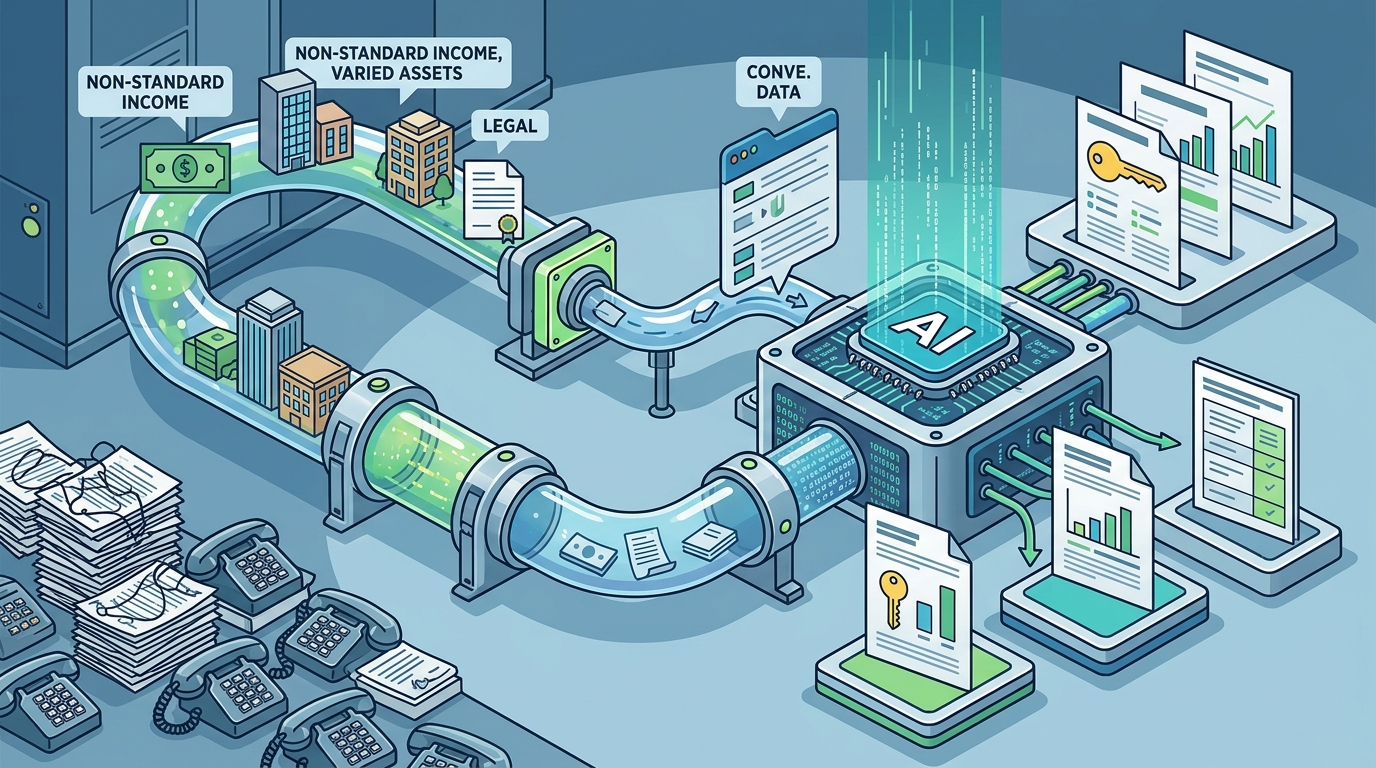
Once your property and financial profile are defined, the next step is to input this data into a comparison engine. Manual outreach to individual lenders is inefficient and often results in inconsistent responses. The Multi-Lender Protocol automates this by presenting your loan request to multiple qualified lenders simultaneously.
When you submit your scenario through a platform like Lendersa, the system uses advanced algorithms to search thousands of lender programs. It evaluates each lender's matrix against your specific criteria, such as loan-to-value (LTV) ratios, interest rate caps, and closing timelines. This process creates a competitive environment where lenders are incentivized to offer their best terms to win your business.
This step is particularly powerful for borrowers with unique situations. Whether you have bad credit, no income documentation, or are looking for a 100% LTV loan, the AI can identify niche private investors who are willing to take on these risks. The system prioritizes the balance of lowest rates, fastest closings, and highest loan amounts, ensuring you do not have to sift through irrelevant offers.
Step 4: Compare Offers via the Dashboard
After the AI has matched your scenario with potential lenders, you will receive a set of competing offers. The next step is to analyze these offers using a structured comparison tool. Do not simply look at the interest rate. You must evaluate the total cost of capital, including points, fees, and prepayment penalties.
| Loan Feature | Hard Money / Private | Conventional / Bank |
|---|---|---|
| Closing Speed | Days to weeks | 30 to 45 days |
| Credit Requirements | Flexible / Equity-focused | Strict / Score-focused |
| Income Verification | Asset-based / No docs | Pay stubs / Tax returns |
| Loan Amounts | Varies by investor | Conforming limits |
Use the Quote Comparison Dashboard to view these metrics side-by-side. Look for lenders who offer the most favorable terms for your specific exit strategy. For example, if you plan to hold the property for a long time, a lower interest rate with higher upfront points might be less optimal than a slightly higher rate with no prepayment penalty. The goal is to find the absolute best program for your property type and loan purpose.
Step 5: Negotiate and Finalize Terms
The final step in the financing comparison process is negotiation and finalization. Because you have multiple offers, you have significant leverage. You can use a competing offer to negotiate better terms with your preferred lender. This is where the "Amazon of lending" model shines, as the competitive pressure drives lenders to improve their proposals.
Once you select a lender, they will issue a Letter of Intent (LOI). This document outlines the final terms of the loan, including the interest rate, points, and closing timeline. Review the LOI carefully to ensure it matches the terms you were quoted. If any discrepancies arise, address them immediately before proceeding to closing.
As you provide additional documents, the AI may re-run the search to find lenders who are ready to issue an LOI quickly. This final round focuses strictly on lenders who have reviewed your data and are ready to move forward. The top lender is awarded the loan, while runners-up are kept on standby in case any processing issues arise. This ensures you never miss an investment opportunity due to funding delays.
Key Takeaways
- Define Your Asset: Clearly categorize your property as residential, commercial, or land to ensure accurate lender matching.
- Prepare Documentation: Have property details, financial profiles, and exit strategies ready to speed up the underwriting process.
- Use AI Matching: Leverage the Multi-Lender Protocol to instantly access thousands of hard money and conventional loan programs.
- Compare Holistically: Evaluate offers based on total cost, not just interest rates, using a structured dashboard.
- Negotiate Terms: Use competing offers to drive down rates and improve conditions before finalizing the loan.
- Verify LOI: Carefully review the Letter of Intent to ensure it matches the quoted terms before closing.
- Act Quickly: Fast-closing hard money lenders can close in days, allowing you to beat competition at auction.
Frequently Asked Questions
What is the Multi-Lender Protocol?
The Multi-Lender Protocol is a proprietary system that presents your loan request to multiple qualified lenders simultaneously, creating a competitive environment that drives them to offer their best terms.
Do I need a Social Security Number to view offers?
No, you can view hard money offers or bank loans instantly without providing a Social Security Number during the initial comparison phase.
How fast can hard money loans close?
Hard money loans are designed for speed, often closing in days rather than months, which is ideal for investors who need to beat competition at auction.
What types of properties are eligible for comparison?
Eligible property types typically include residential, commercial, vacant land, and start-up construction projects.
Can I compare hard money loans with conventional bank loans?
Yes, the platform aggregates programs from big banks, credit unions, private investors, and hard money brokers to provide a comprehensive comparison.
What is a Letter of Intent (LOI)?
A Letter of Intent is a document issued by a lender outlining the final terms of the loan, including interest rate, points, and closing timeline, after reviewing your data.
How does Lendersa help with bad credit?
Lendersa focuses on equity and property viability rather than just credit scores, allowing borrowers with bad credit to access private capital and hard money loans.
Ready to Compare Your Financing Options?
Stop searching and let lenders compete for you. The financing comparison process is no longer a manual chore. By leveraging AI to match your scenario with hundreds of hard money lenders, private investors, and banks, you can secure the best deal in minutes. Whether you need a fix-and-flip loan, a construction loan, or a conventional mortgage, the right capital is waiting. Start your financing comparison today and discover the power of the Multi-Lender Protocol.