

Starting a financing search does not require you to contact every bank, private investor, and hard money lender separately. A more organized approach is to define the transaction, assemble the information lenders need, submit one consistent scenario for comparison, and evaluate the resulting options by total cost, flexibility, and timing.
Lendersa is designed to help borrowers compare financing opportunities across residential, commercial, and vacant land transactions. The platform can help users explore conventional and hard money possibilities with AI-assisted matching, and the initial comparison process can begin without entering a Social Security Number. Contact Lendersa for answers about your scenario if you need help determining where to begin.
Quick answer: What steps are needed to start?
To start the financing comparison process, complete six basic tasks:
- Identify the property type and purpose of the loan.
- Estimate the purchase price, project budget, requested loan amount, and available cash.
- Gather property, borrower, entity, and exit-strategy information.
- Submit the scenario through a comparison platform such as Lendersa for borrowers.
- Compare lenders using consistent assumptions, including rate, points, fees, leverage, term, closing speed, and prepayment conditions.
- Verify the written proposal and final loan documents before selecting a lender.
The purpose of comparison is not simply to find the lowest advertised interest rate. It is to identify financing that fits the property, repayment plan, risk profile, budget, and deadline.
1. Define the deal before requesting financing
Lenders cannot accurately assess an incomplete scenario. Before beginning, write down the facts of the transaction in a short financing summary. This makes it easier to submit the same information to multiple capital sources and reduces the risk of comparing offers based on different assumptions.
Identify the property category
Start by classifying the asset as one of the following:
- Residential: A single-family home, condominium, duplex, multifamily property, or similar residential asset.
- Commercial: An office, retail, industrial, multifamily, mixed-use, hospitality, or other income-producing property.
- Vacant land: Unimproved land, development land, infill parcels, agricultural land, or land intended for a future project.
- Construction or redevelopment: A transaction involving ground-up construction, major renovation, or a conversion project.
Property classification affects the lender pool, required documentation, valuation method, leverage limits, interest structure, and expected closing process. A lender that is competitive for an owner-occupied conventional mortgage may not be the right fit for a land acquisition or a short-term bridge loan.
State the purpose of the funds
Next, explain why you need the financing. Common purposes include acquisition, refinance, cash-out refinance, bridge financing, fix-and-flip work, construction, land development, debt restructuring, or investment-property purchase.
Also state your intended exit strategy. For example, repayment may come from selling the property, refinancing into a long-term mortgage, completing construction and obtaining permanent financing, or using operating income to service the debt. Hard money and private lenders often place substantial emphasis on collateral, equity, project feasibility, and the repayment plan, while conventional underwriting commonly requires more standardized income and credit documentation.
2. Prepare the information lenders will evaluate
You do not need a perfect underwriting file to begin a preliminary comparison, but accurate information produces more useful results. Prepare a concise package organized into four groups.
Property information
- Property address or target market.
- Property type and current use.
- Purchase price or estimated value.
- Existing mortgage balance, if refinancing.
- Current rent roll and operating statements for income-producing property.
- Appraisal, broker price opinion, or comparative market analysis when available.
- Repair, renovation, or construction budget.
- Estimated after-repair value or stabilized value when relevant.
Financing request
- Requested loan amount.
- Preferred term and estimated closing date.
- Desired amortization or interest-only structure.
- Down payment or equity contribution.
- Whether funds are needed for acquisition, improvements, refinance, or another purpose.
- Acceptable range for monthly payment, points, and closing costs.
Borrower and entity profile
- Borrower name and contact information.
- Business or investment entity details, if applicable.
- Relevant real estate experience.
- Credit profile summary when known.
- Income, assets, liquidity, and existing obligations.
- Proof of funds for equity, reserves, closing costs, or construction draws.
Exit strategy
Describe how and when the loan is expected to be repaid. A fix-and-flip borrower might plan to sell after renovations. A land investor might expect to sell after obtaining entitlements. A commercial borrower might refinance after improving occupancy. Include a backup plan when possible, because a lender may evaluate both the primary and secondary repayment sources.
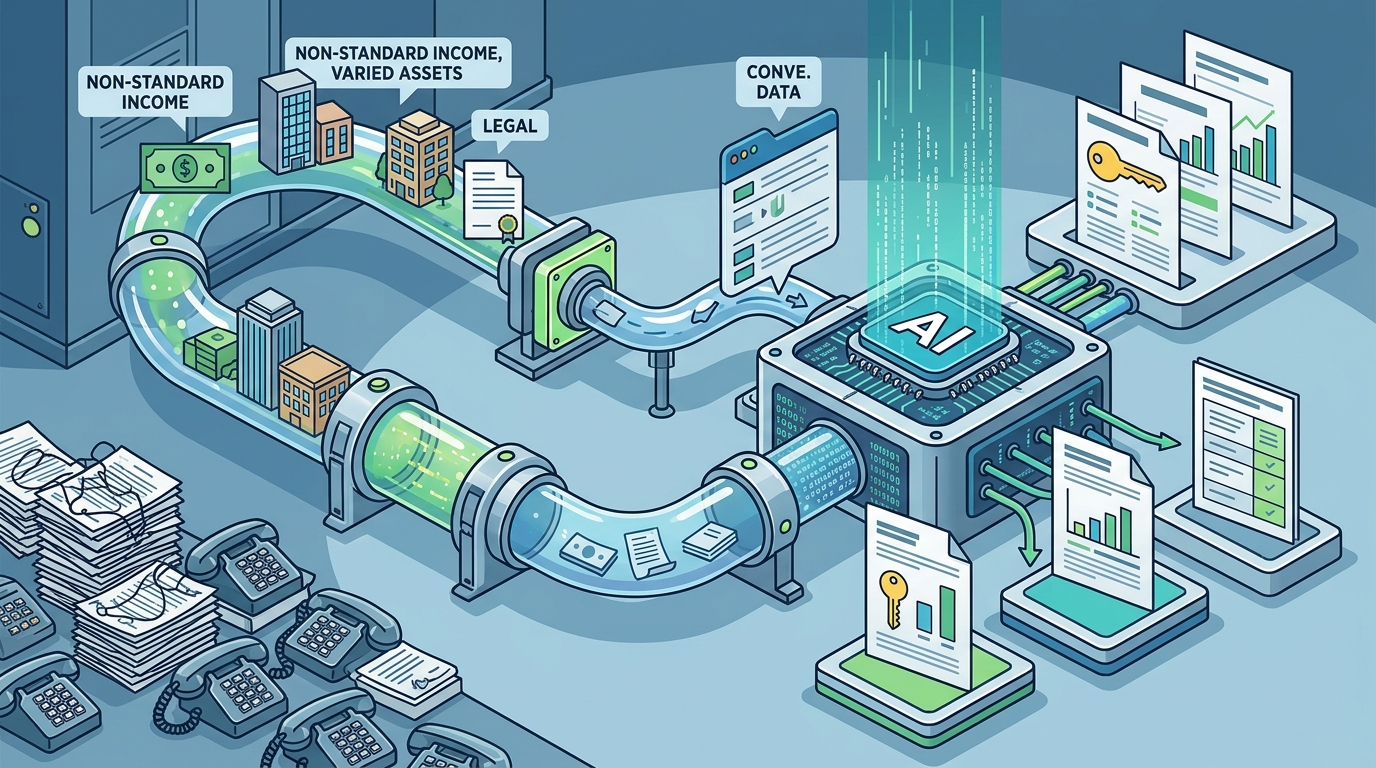
Organizing these details before submission helps an AI comparison tool filter programs more effectively. It also gives lenders a clearer basis for responding, especially when the scenario involves self-employment, limited income documentation, damaged credit, unusual collateral, or a non-standard property.
3. Start the financing comparison with one consistent scenario
Once the transaction summary is ready, enter the request into a multi-lender comparison process. Instead of sending slightly different descriptions to individual lenders, use the same core assumptions for each potential financing source.
Through the Lendersa borrower marketplace, a borrower can present a scenario for comparison across available conventional, private money, and hard money programs. AI-assisted matching can help identify lenders whose guidelines are more closely aligned with the requested property type, leverage, borrower profile, and timeline.
The initial comparison stage is different from final underwriting. A preliminary match or indication is not the same as an approval, commitment, Loan Estimate, Letter of Intent, or closing package. Final terms may change after the lender verifies property value, title, credit, income, insurance, environmental conditions, construction costs, or other material facts.
Information that improves matching
Be specific about details that commonly change lender eligibility:
- Loan-to-value or loan-to-cost target.
- Purchase price and estimated value.
- Current property condition.
- Borrower experience with similar projects.
- Credit or income-documentation limitations.
- Construction or renovation schedule.
- Expected holding period.
- Urgency of the closing date.
Avoid overstating value, understating costs, or describing a speculative exit as certain. A realistic request may produce fewer initial matches, but those matches are more likely to remain useful during due diligence.
4. Compare financing options using the complete cost structure
When results are available, place them into a side-by-side comparison. For consumer mortgages, the Consumer Financial Protection Bureau recommends requesting and reviewing multiple Loan Estimates and comparing the same loan type, term, and assumptions. Its guidance highlights interest rate, monthly payment, origination charges, lender credits, cash to close, and the total cost of borrowing as important comparison points. ([consumerfinance.gov](https://www.consumerfinance.gov/owning-a-home/compare/compare-loan-estimates/?utm_source=openai))
For commercial, land, private, and hard money transactions, the documents may not use the same standardized format. You should therefore create your own comparison sheet and ask each lender to identify every material cost.
| Comparison item | Why it matters | Questions to ask |
|---|---|---|
| Interest rate | Determines interest expense, but may not represent the full cost. | Is the rate fixed, variable, or subject to a floor or cap? |
| Points and origination fees | Upfront charges can materially affect short-term financing. | How many points are charged, and are other origination or underwriting fees added? |
| Loan amount and leverage | A higher approval amount may reduce the equity required. | Is leverage based on purchase price, appraised value, loan-to-cost, or after-repair value? |
| Term and maturity | A loan that matures before the exit can create refinancing or sale pressure. | Is there an extension option, and what does it cost? |
| Payment structure | Interest-only payments may improve short-term cash flow but may not reduce principal. | When does principal amortization begin, and is a balloon payment due? |
| Prepayment terms | A penalty may reduce the benefit of an early sale or refinance. | Is there a prepayment penalty, minimum interest period, or exit fee? |
| Closing timeline | The fastest offer may be more valuable when a purchase contract or auction deadline is approaching. | What must be completed before funding, and who controls the timeline? |
| Collateral and recourse | Personal guarantees or additional collateral can increase borrower exposure. | Is the loan recourse, non-recourse, or subject to carve-outs? |
| Draw and inspection rules | Construction borrowers need predictable access to remaining proceeds. | How are draws requested, inspected, approved, and funded? |
For a conventional mortgage, the CFPB notes that points, lender credits, origination charges, prepayment terms, rate changes, and total payment should be reviewed together rather than in isolation. A lower rate can come with higher points, while a loan advertised as having no closing costs may recover those costs through a higher rate or payment. ([consumerfinance.gov](https://www.consumerfinance.gov/consumer-tools/mortgages/shopping-for-a-mortgage/?utm_source=openai))
5. Ask targeted questions and negotiate with comparable offers
Comparison becomes more useful when every lender receives the same follow-up questions. Ask the lender to confirm the proposed loan amount, rate, points, fees, term, payment structure, collateral, closing conditions, and estimated funding date in writing.
Multiple offers can create negotiating leverage. The CFPB advises borrowers to compare offers and ask lenders whether they can reduce fees, lower the rate, or adjust points, while watching for a reduction in one charge that is offset by an increase elsewhere. ([consumerfinance.gov](https://www.consumerfinance.gov/owning-a-home/compare/compare-loan-estimates/?utm_source=openai))
For example, a borrower seeking a $300,000 bridge loan might compare:
- Offer A: 11.00% interest, two points, 12-month term, no stated prepayment penalty, and a 10-business-day target closing.
- Offer B: 10.50% interest, four points, 12-month term, six months of minimum interest, and a 20-business-day target closing.
Offer B has the lower stated rate, but Offer A could be less expensive if the borrower expects to sell in four months. Conversely, if the property will be held for the full term, the rate difference may deserve more weight. The correct choice depends on the complete cost and the reliability of the exit strategy, not on one headline number.
6. Confirm the written proposal before selecting a lender
After choosing a preferred option, request the appropriate written document for the transaction. A residential mortgage may progress through a Loan Estimate and later a Closing Disclosure. A private or commercial transaction may use a term sheet, proposal, commitment letter, or Letter of Intent. A Letter of Intent generally summarizes key business terms such as the loan amount, interest rate, points, fees, collateral, conditions, and anticipated closing timeline, but it may not be the final binding loan agreement.
Review the written terms against the comparison you originally received. Confirm that the lender has not changed the leverage calculation, valuation assumption, interest-only period, reserve requirement, extension fee, draw schedule, guaranty, or prepayment language. Ask for clarification before paying significant third-party costs or signing final documents.
For most residential mortgages, the CFPB explains that a Loan Estimate is a standardized disclosure intended to make offers easier to compare, but it is not itself a final approval. ([consumerfinance.gov](https://www.consumerfinance.gov/ask-cfpb/what-is-a-loan-estimate-en-1995/?utm_source=openai))
If the terms no longer work, return to the comparison results and evaluate the next-best option. Keeping a qualified alternative available can be especially important when a transaction has a strict closing deadline.
Practical example: comparing a fix-and-flip request
Imagine an investor is considering a $220,000 property that requires $60,000 in renovations. The investor estimates an after-repair value of $390,000, has $75,000 available for equity and costs, and expects to sell within nine months.
The investor should begin by documenting the purchase contract, renovation scope, contractor estimates, comparable sales, available funds, prior project experience, and planned sale strategy. The financing request might ask lenders to evaluate a purchase-and-renovation structure rather than a standard owner-occupied mortgage.
After submitting the scenario, the investor could receive a mix of hard money and conventional-related alternatives. A conventional option might offer a lower long-term rate but require more income documentation, a longer underwriting period, and restrictions that do not fit the property condition. A hard money option might close faster and underwrite primarily around collateral and project economics, but charge more interest, points, and fees.
The investor should compare the expected dollar cost through the planned nine-month hold, the amount of cash required at closing, the availability and timing of renovation draws, extension provisions, minimum interest, and the consequences if the property takes longer to sell. The best financing option is the one that supports a realistic exit without creating an unmanageable cost or deadline risk.
Financing comparison safety checks
A faster comparison process should still include basic consumer and transaction safeguards.
- Do not treat a match as a guaranteed approval. Eligibility depends on lender review and verification.
- Read every fee disclosure. Ask who receives each fee, when it is due, and whether it is refundable.
- Be cautious of guaranteed loans. The Federal Trade Commission warns that advance-fee loan scams often promise credit regardless of history and demand payment for processing, insurance, or paperwork before delivering a loan. ([consumer.ftc.gov](https://consumer.ftc.gov/articles/what-know-about-advance-fee-loans?utm_source=openai))
- Protect sensitive information. Begin with the minimum information needed for comparison and provide Social Security numbers, bank credentials, or other sensitive data only through a verified lender process when required.
- Confirm licensing where applicable. For residential mortgage professionals, the CFPB recommends checking the Nationwide Mortgage Licensing System and Registry by name or NMLS identification number. ([consumerfinance.gov](https://www.consumerfinance.gov/owning-a-home/loan-estimate/?utm_source=openai))
- Use independent professionals. Consider having a real estate attorney, accountant, title professional, or qualified loan adviser review complex commercial, construction, or private-money documents.
Key takeaways
- Start with a clear financing brief: Identify the property, purpose, loan amount, timeline, and repayment plan.
- Prepare practical documentation: Property details, valuation support, budgets, liquidity, credit information, and an exit strategy make comparisons more meaningful.
- Use one consistent scenario: Comparable inputs help you distinguish genuine pricing differences from differences in assumptions.
- Compare total cost: Review rate, points, fees, payment, leverage, prepayment terms, reserves, draw rules, and closing speed.
- Use competition carefully: Multiple offers can help you ask lenders to improve pricing or terms, but confirm that one fee is not simply being replaced by another.
- Verify final documents: Preliminary indications, term sheets, and Letters of Intent are not substitutes for reviewing final loan documents.
- Protect yourself: Avoid guaranteed-loan claims and unexplained advance fees, and share sensitive information only through verified channels.
Frequently asked questions
What is the first step in comparing financing?
The first step is to define the transaction. Identify the property type, intended use of funds, estimated value or purchase price, requested loan amount, available equity, closing deadline, and exit strategy.
What information should I prepare before starting?
Prepare the property address and type, purchase or refinance details, valuation information, repair or construction budget, borrower and entity details, available funds, credit and income summary, and repayment plan. You can begin with preliminary information and add documents as lenders request them.
Can I begin a comparison without a Social Security Number?
Lendersa’s initial comparison process is designed to let users begin exploring financing options without entering a Social Security Number. A lender may request additional identity, credit, income, or financial information later during underwriting or application.
Does Lendersa compare only conventional mortgages?
No. Lendersa is designed to help users compare conventional and alternative financing possibilities across residential, commercial, and vacant land sectors, including hard money and private-money options when available for the scenario.
How should I compare a hard money offer with a conventional offer?
Compare the offers using the same requested amount and transaction assumptions, then review rate, points, fees, leverage, payment structure, term, closing timeline, documentation requirements, prepayment provisions, and expected cost through your planned exit. A lower rate is not automatically the better option if it requires more cash, takes too long to close, or does not fit the property.
Is a preliminary lender match an approval?
No. A preliminary match or indication identifies a potentially suitable program. Final approval and funding remain subject to lender underwriting, verification, valuation, title, insurance, legal review, and satisfaction of all stated conditions.
What is a Letter of Intent?
A Letter of Intent is a document that summarizes proposed financing terms after a lender has reviewed some or all of the scenario. It may describe the loan amount, rate, points, fees, collateral, conditions, and expected closing timeline. Review it carefully and confirm which provisions are binding before proceeding.
How can borrowers with complex income or damaged credit begin?
Describe the situation accurately and emphasize the property, available equity, project economics, experience, and exit strategy. Alternative lenders may evaluate factors differently from conventional lenders, but no financing is guaranteed. The quality of the collateral and repayment plan still matters.
Should I pay an upfront fee to guarantee a loan?
Be extremely cautious. The FTC warns that a lender or intermediary promising guaranteed credit and requesting an upfront processing, insurance, or paperwork fee may be operating an advance-fee scam. Legitimate lenders may charge certain disclosed application, appraisal, or credit-related fees in appropriate circumstances, but payment should never be treated as a guarantee of approval. ([consumer.ftc.gov](https://consumer.ftc.gov/articles/what-know-about-advance-fee-loans?utm_source=openai))
Conclusion: Begin with clarity, then compare strategically
The financing comparison process starts well before a lender quotes an interest rate. Define the property and purpose, organize the essential facts, submit a consistent request, and compare the complete financial and operational terms. This approach gives borrowers a clearer way to evaluate conventional, hard money, and private capital without relying on a single lender’s assumptions.
Whether you are purchasing a home, refinancing an investment property, acquiring commercial real estate, improving a distressed asset, or financing vacant land, start your financing comparison with Lendersa and use the resulting information to ask better questions and make a more informed decision. For transaction-specific questions, contact Lendersa.