

Legitimate Private Lender vs Loan Shark: How to Spot the Red Flags
Private lending has evolved from a niche alternative to a cornerstone of real estate finance, yet the line between a legitimate capital source and a predatory lender remains dangerously thin. According to recent industry analyses, the private money lending market has grown significantly, with billions of dollars flowing into non-bank channels annually as borrowers seek speed and flexibility that traditional institutions cannot provide. However, this growth has also attracted bad actors who exploit the urgency of distressed borrowers. Understanding the structural differences between a regulated private lender and a loan shark is not just about avoiding high interest rates; it is about protecting your equity, your credit, and your legal standing. This guide dissects the operational mechanics of legitimate private capital, using the Lendersa ecosystem as a benchmark for transparency, and provides a definitive framework for identifying predatory behavior before you sign any documents.
Understanding Private Lending vs. Traditional Banking
Private lending is defined as capital provided by non-bank financial institutions or individual investors rather than traditional depository institutions. Unlike conventional mortgages, which rely heavily on borrower income verification and credit scores, private loans are primarily asset-based. This means the lender's primary concern is the value and liquidity of the collateral, typically real estate, rather than the borrower's personal financial history. This distinction is crucial because it explains why private lenders can offer faster closings and more flexible terms, but also why they charge higher interest rates to compensate for the increased risk.
Legitimate private lenders operate within a framework of regulatory compliance, even if they are not banks. They must adhere to state usury laws, disclose all fees clearly, and often register as mortgage lenders or brokers. In contrast, a loan shark operates entirely outside these legal boundaries, using intimidation, lack of documentation, and exorbitant, hidden costs to trap borrowers in a cycle of debt. The difference is not just in the cost of capital, but in the integrity of the transaction.
Key Differences: Legitimate Lenders vs. Loan Sharks
Identifying the source of your capital requires a close examination of their operational transparency. Legitimate private lenders, such as those aggregated through platforms like Lendersa, utilize advanced algorithms to match borrowers with multiple competing offers, ensuring market-rate pricing. This competitive environment drives down costs and improves terms for the borrower. Loan sharks, by definition, have no competition. They set the terms unilaterally, often with no room for negotiation, and their primary goal is not the return on investment but the control over the borrower.
Transparency is the hallmark of legitimacy. A legitimate lender will provide a Loan Estimate within three business days of receiving your application, detailing all closing costs, interest rates, and prepayment penalties. They will also conduct a title search to ensure the property can be legally used as collateral. Loan sharks often skip these steps, offering "cash today" with verbal agreements that are later disputed. They may not even check the title, leaving you vulnerable to legal challenges from previous lienholders.
Red Flags of Predatory Lending Practices
Recognizing the warning signs of a loan shark can save you from financial ruin. The first and most obvious red flag is the pressure to act immediately. Predatory lenders often create a false sense of urgency, claiming that the offer is only valid for a few hours or days. This tactic prevents you from conducting due diligence or shopping around for better rates. Legitimate lenders understand that real estate transactions take time and will give you reasonable deadlines to review documents.
Another critical warning sign is the lack of proper documentation. If a lender refuses to provide a written promissory note, a deed of trust, or a clear amortization schedule, walk away. Legitimate lenders, including those on the Lendersa Borrower Portal, provide comprehensive digital documentation that outlines every aspect of the loan. Loan sharks often rely on verbal promises or vague contracts that can be interpreted in their favor during a dispute.
Exorbitant upfront fees are also a major red flag. While legitimate lenders do charge origination fees and points, these are typically a percentage of the loan amount and are disclosed upfront. Loan sharks may demand large upfront payments in cash or wire transfers before any paperwork is signed, with no guarantee of funding. These fees are often non-refundable, even if the loan does not close. Additionally, be wary of lenders who ask for access to your personal bank accounts or financial records beyond what is necessary for underwriting.
Due Diligence: How to Vet a Private Lender
Protecting yourself from predatory lending requires proactive due diligence. Start by verifying the lender's license. In the United States, private lenders must be licensed in the state where the property is located. You can check this through your state's Department of Financial Institutions or the Nationwide Multistate Licensing System & Registry (NMLS). A legitimate lender will have a valid license number that you can verify online. If they cannot provide this information, or if the license is expired or inactive, do not proceed.
Research the lender's reputation. Look for reviews on independent platforms, check with the Better Business Bureau, and search for any legal disputes or regulatory actions. Legitimate lenders, such as those featured in the Lendersa Blog, often have a strong online presence and a history of positive client interactions. Loan sharks, on the other hand, often have little to no online footprint, or their reviews are suspiciously generic and positive.
Finally, consult with a real estate attorney before signing any documents. An attorney can review the loan terms, identify hidden clauses, and ensure that the transaction complies with state laws. This step is particularly important for complex transactions, such as fix-and-flip loans or commercial real estate financing. The cost of an attorney is negligible compared to the potential losses from a predatory loan. By using a platform like Lendersa, you gain access to a network of vetted, legitimate lenders who are required to adhere to strict compliance standards, reducing the risk of encountering a loan shark.
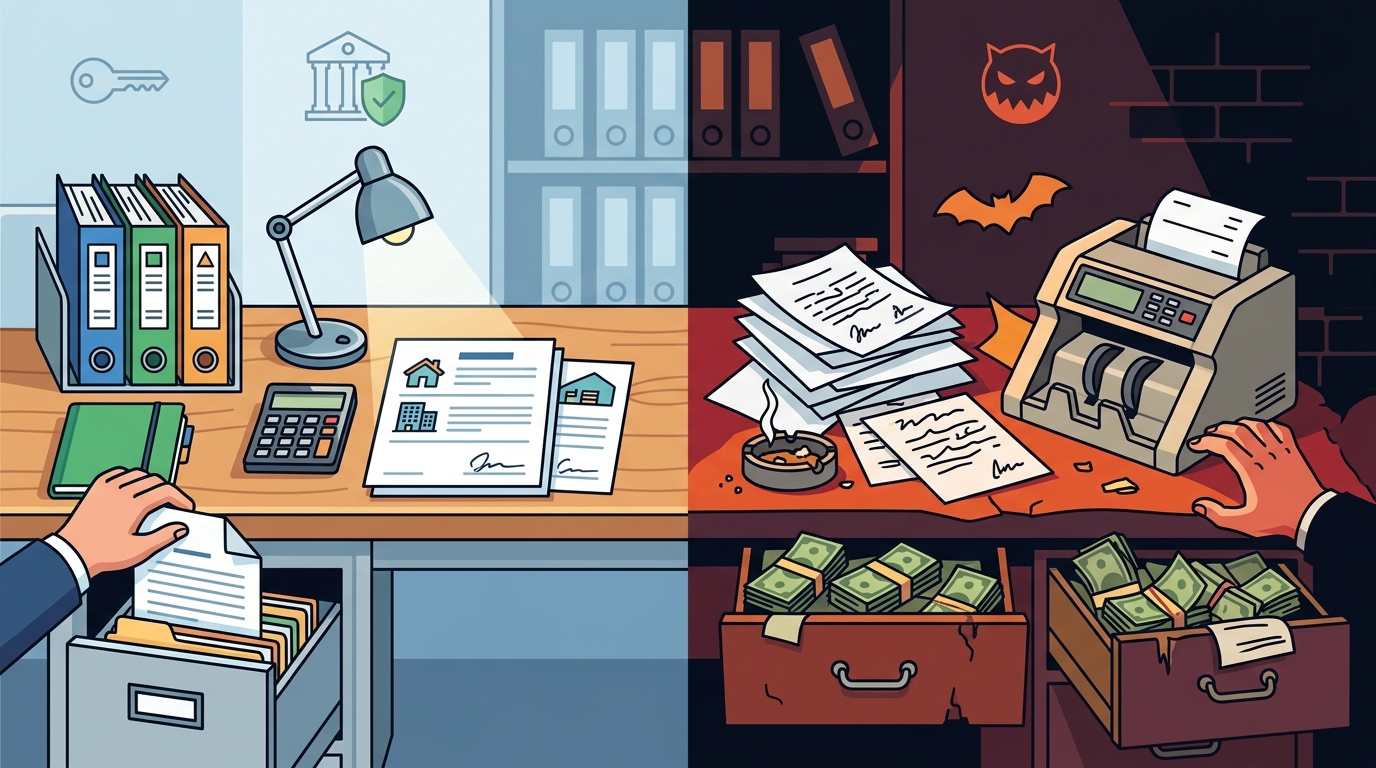
Comparison: Legitimate vs. Predatory Lending Structures
| Feature | Legitimate Private Lender | Loan Shark / Predatory Lender |
|---|---|---|
| Licensing | Licensed in the state of operation; verifiable via NMLS. | Unlicensed or uses fake credentials; no verifiable license. |
| Documentation | Provides Loan Estimate, Promissory Note, and Deed of Trust. | Verbal agreements only; vague or missing written contracts. |
| Interest Rates | Market-rate, disclosed upfront; competitive via multi-lender bidding. | Exorbitant, hidden, or variable rates; no disclosure. |
| Upfront Fees | Standard origination fees; disclosed in Loan Estimate. | Large, non-refundable cash demands before any paperwork. |
| Transparency | Clear terms, no hidden clauses; open to attorney review. | Pressure to sign quickly; refuses attorney review. |
| Competition | Multiple offers available; rates driven by market competition. | Monopoly on the deal; no negotiation possible. |
Key Takeaways
- Legitimacy is Verifiable: Always check a lender's license via the NMLS or your state's financial regulator. Legitimate lenders, such as those on Lendersa, are fully licensed and compliant.
- Documentation is Non-Negotiable: A legitimate lender will provide a Loan Estimate within three days. No written contract means no deal.
- Urgency is a Tactic: Predatory lenders use false urgency to prevent due diligence. Legitimate lenders respect your need to review terms.
- Transparency Protects You: Look for clear disclosure of all fees, interest rates, and prepayment penalties. Hidden costs are a hallmark of loan sharks.
- Competition Lowers Costs: Using a multi-lender platform like Lendersa ensures you receive competitive market rates, not predatory ones.
- Attorney Review is Essential: Never sign a private loan without legal review. An attorney can identify predatory clauses that you might miss.
- Asset-Based Underwriting: Legitimate private lenders focus on the property's value, not just your credit score, but they still require proper underwriting and title checks.
Frequently Asked Questions
What is the main difference between a private lender and a loan shark?
A private lender is a licensed financial entity that operates within regulatory frameworks, providing transparent terms and competitive rates. A loan shark operates illegally, using intimidation, hidden fees, and lack of documentation to exploit borrowers.
How can I verify if a private lender is licensed?
You can verify a lender's license through the Nationwide Multistate Licensing System & Registry (NMLS) or your state's Department of Financial Institutions. Legitimate lenders will have a valid, active license number.
What should I do if a lender asks for upfront cash before signing?
Be extremely cautious. While legitimate lenders charge origination fees, these are typically disclosed in the Loan Estimate and paid at closing. Large, non-refundable cash demands before any paperwork is a major red flag of predatory lending.
Can I negotiate terms with a private lender?
Yes, legitimate private lenders are often open to negotiation, especially if you have multiple offers. Platforms like Lendersa facilitate this by pitting lenders against each other to secure the best terms for you.
What is a Loan Estimate?
A Loan Estimate is a standardized form that lenders must provide within three business days of receiving a loan application. It details the loan terms, estimated monthly payments, and all closing costs, ensuring transparency.
Why do private lenders charge higher interest rates than banks?
Private lenders charge higher rates because they take on more risk, such as lending to borrowers with lower credit scores or for properties that need renovation. However, these rates should still be competitive and transparent, not exorbitant.
How does Lendersa protect borrowers from predatory lenders?
Lendersa uses a Multi-Lender Protocol to match borrowers with hundreds of vetted, legitimate lenders. This competitive environment ensures market-rate pricing and transparency, eliminating the need to deal with unlicensed or predatory individuals.
What is a fix-and-flip loan?
A fix-and-flip loan is a short-term private loan used to purchase and renovate a property with the intention of selling it for a profit. These loans are asset-based and typically have higher interest rates than conventional mortgages.
Secure Your Capital with Confidence
Do not leave your financial future to chance. The difference between a life-changing investment and a financial nightmare often comes down to the source of your capital. By choosing a legitimate, vetted lender, you ensure transparency, competitive rates, and legal protection. Lendersa® is dedicated to connecting you with the best hard money and private lenders in the market. Stop searching and let our AI find your best loan offer today. Start your loan search now and secure the capital you need with peace of mind.