

Private lending has evolved from a niche alternative to a critical component of modern real estate finance, yet the line between a legitimate capital source and predatory exploitation remains dangerously thin. According to recent industry analyses, the private money lending market has grown significantly, with billions of dollars flowing into non-bank loans annually to fund fix-and-flip projects and bridge transactions. However, this growth has also attracted bad actors who exploit the urgency of borrowers who have been denied by traditional banks. Understanding the structural differences between regulated capital providers and predatory lenders is essential for protecting your equity and ensuring your investment journey remains profitable. (Get Answers For Hard)
Understanding Private Lending and Its Risks
Private lending, often referred to as hard money lending, involves capital provided by individual investors or private companies rather than traditional financial institutions like banks or credit unions. This type of financing is typically asset-based, meaning the loan is secured by the value of the real estate property rather than the borrower's credit score or income documentation. While this allows for faster closings and more flexible terms, it also comes with higher interest rates and shorter repayment periods.
The primary risk in this sector is the lack of uniform oversight compared to the banking industry. While banks are heavily regulated by federal agencies, private lenders operate under a more complex web of state and federal laws. This regulatory gap can create opportunities for unethical operators to impose unfair terms, hidden fees, or aggressive collection tactics. Borrowers must be vigilant in distinguishing between legitimate lenders who offer a necessary financial service and those who seek to exploit the borrower's desperation.
Legitimate private lenders focus on the viability of the collateral and the borrower's exit strategy. They are interested in whether the property can be sold or refinanced to repay the loan. In contrast, predatory lenders may focus on the borrower's lack of alternatives, using the urgency of the situation to pressure them into accepting unfavorable terms without proper disclosure.
Red Flags of Predatory Practices
Identifying a loan shark or predatory lender requires a keen eye for warning signs that deviate from standard industry practices. One of the most significant red flags is the refusal to provide clear, written documentation of loan terms before funding. Legitimate lenders will always provide a Loan Estimate or similar disclosure document that outlines the interest rate, points, fees, and repayment schedule in detail.
Another critical warning sign is the demand for upfront fees before any due diligence or underwriting has occurred. While legitimate lenders may charge application or appraisal fees, these are typically modest and tied to specific services. Predatory lenders often demand large upfront payments with no guarantee of funding, effectively stealing money from borrowers who are already in a vulnerable financial position.
Unrealistic promises are also a common tactic used by loan sharks. If a lender guarantees approval regardless of the property's condition or the borrower's financial history, it is likely a scam. Legitimate lenders conduct thorough due diligence to assess risk. They will require property appraisals, title searches, and proof of insurance. A lender who skips these steps is not protecting their capital and may have ulterior motives.
Pressure tactics are another hallmark of predatory lending. Loan sharks often create a false sense of urgency, claiming that the offer is only valid for a few hours or that funds are running out. This pressure prevents borrowers from taking the time to review the terms, compare offers, or seek legal advice. Legitimate lenders understand the importance of informed consent and will give borrowers adequate time to make a decision.
The Verification Checklist for Legitimacy
To protect yourself from predatory lending, you must actively verify the legitimacy of any private lender you consider. Start by checking their licensing status. In the United States, private lenders must be licensed in the state where the property is located. You can verify this through your state's Department of Financial Institutions or Banking Commission website. A legitimate lender will have a valid license number that can be cross-referenced with public records.
Next, research the lender's reputation. Look for reviews on independent platforms, check their standing with the Better Business Bureau, and search for any legal judgments or complaints filed against them. A history of unresolved complaints or legal actions is a strong indicator of unethical practices. Additionally, verify their physical address and contact information. Legitimate lenders have a verifiable physical presence and professional communication channels.
Review the loan terms carefully. Legitimate lenders will provide a clear and detailed loan agreement that outlines all costs, including origination fees, points, and interest rates. Be wary of lenders who use complex legal jargon to obscure the true cost of the loan. If the terms seem unclear or too good to be true, seek advice from a real estate attorney or a trusted financial advisor.
Finally, trust your instincts. If something feels off during your interactions with a lender, it probably is. Legitimate lenders are transparent, professional, and responsive. They will answer your questions clearly and provide documentation to support their claims. If a lender is evasive, aggressive, or unwilling to provide information, walk away and seek other options.
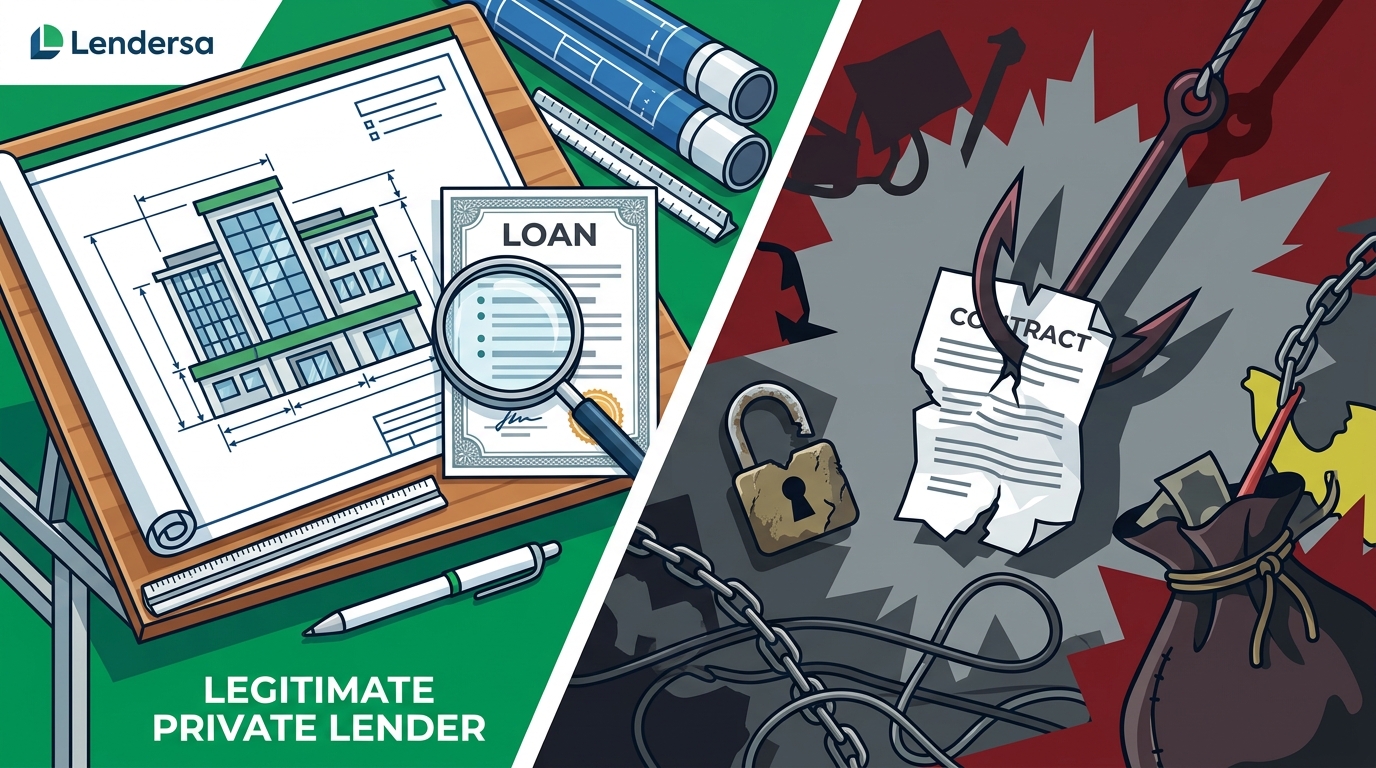
Legitimate Lender vs. Loan Shark Comparison
Understanding the differences between legitimate private lenders and predatory lenders is crucial for making informed decisions. The following table summarizes the key distinctions in terms of licensing, transparency, and operational practices.
| Criteria | Legitimate Private Lender | Predatory Lender / Loan Shark |
|---|---|---|
| Licensing | Licensed in the state of property location; verifiable via state regulatory databases. | Unlicensed or uses fake license numbers; refuses to provide verification details. |
| Transparency | Provides clear Loan Estimates and detailed loan agreements with all fees disclosed. | Obscures terms with complex jargon; refuses to provide written documentation. |
| Due Diligence | Conducts thorough property appraisals, title searches, and risk assessments. | Skips due diligence; guarantees approval without reviewing the property or borrower. |
| Fees | Charges reasonable upfront fees for specific services like appraisals or processing. | Demands large upfront payments with no guarantee of funding or service. |
| Communication | Professional, responsive, and willing to answer questions clearly. | Uses pressure tactics, creates false urgency, or is evasive and unresponsive. |
Key Takeaways
- Verify Licensing: Always check the lender's license status with your state's Department of Financial Institutions before proceeding.
- Demand Documentation: Legitimate lenders provide clear Loan Estimates and detailed loan agreements; never accept verbal promises.
- Watch for Upfront Fees: Be wary of lenders demanding large upfront payments without providing specific services or guarantees.
- Research Reputation: Check reviews, BBB ratings, and legal records to identify any history of complaints or fraud.
- Trust Your Instincts: If a lender uses pressure tactics or seems evasive, walk away and seek other options.
- Use AI Tools: Platforms like Lendersa use AI to match borrowers with vetted lenders, reducing the risk of encountering predatory operators.
- Compare Offers: Always compare multiple offers using tools like the Quote Comparison Dashboard to ensure you are getting the best terms.
Frequently Asked Questions
How do I know if a private lender is licensed?
You can verify a private lender's license by checking with your state's Department of Financial Institutions or Banking Commission. Most states maintain an online database where you can search for license numbers and check for any disciplinary actions.
What are the typical fees charged by legitimate private lenders?
Legitimate private lenders typically charge origination points (usually 1-5 points), appraisal fees, title search fees, and processing fees. These fees are disclosed in the Loan Estimate and are tied to specific services.
Can I get a private loan with bad credit?
Yes, private lenders focus primarily on the value of the collateral property rather than the borrower's credit score. However, they will still assess the borrower's ability to repay the loan through an exit strategy, such as selling the property or refinancing.
What should I do if I suspect a lender is predatory?
If you suspect a lender is predatory, stop all communication immediately. Report the lender to your state's Attorney General, the Federal Trade Commission (FTC), and your state's Department of Financial Institutions. Do not sign any documents or pay any fees.
How does Lendersa help borrowers avoid loan sharks?
Lendersa uses advanced AI to match borrowers with hundreds of vetted hard money lenders, private investors, and banks. By aggregating offers and facilitating competition, Lendersa helps borrowers find the best terms while avoiding predatory operators who are not part of the network.
What is the Multi-Lender Protocol?
The Multi-Lender Protocol is Lendersa's proprietary process that presents a borrower's loan request to multiple qualified lenders simultaneously. This creates a competitive environment that drives lenders to offer their best terms, ensuring the borrower gets the most favorable deal.
Are hard money loans regulated?
Yes, hard money loans are regulated at both the state and federal levels. Lenders must comply with usury laws, disclosure requirements, and licensing regulations specific to their jurisdiction. However, the level of oversight can vary by state, making due diligence essential.
Secure Your Capital with Confidence
Navigating the private lending landscape requires vigilance, knowledge, and the right tools. By understanding the red flags of predatory lending and verifying the legitimacy of your capital sources, you can protect your investments and achieve your real estate goals. Lendersa offers a secure, AI-driven platform that connects you with vetted lenders across the USA, Canada, and Puerto Rico. Start your journey to secure financing today by exploring our Borrowers Portal and comparing offers from top-tier lenders.