

Traditional mortgage lending has undergone a seismic shift in how capital is allocated to real estate investors. According to recent industry data, the gap between conventional financing requirements and the needs of fix-and-flip investors has widened significantly, creating a massive demand for alternative capital sources. This divergence means that borrowers can no longer rely on a single loan product to meet every investment goal. Understanding the mechanical differences between hard money and conventional loans is the first step toward securing the most favorable terms for your property. (Get Answers For Hard)
What Are the Core Differences?
To make an informed decision, you must first understand the fundamental nature of each loan type. A hard money loan is a short-term, asset-based loan provided by private investors or companies, secured by the value of the underlying real estate. These loans are designed for speed and flexibility, often ignoring traditional debt-to-income ratios in favor of the property's after-repair value (ARV). (About Lendersa 50 Years)
In contrast, a conventional loan is a long-term mortgage offered by banks and credit unions, governed by strict underwriting guidelines set by government-sponsored enterprises like Fannie Mae and Freddie Mac. Conventional loans focus heavily on the borrower's financial history, including credit scores, employment verification, and stable income streams. The primary distinction lies in the underwriting focus: hard money lenders look at the collateral, while conventional lenders look at the borrower. (Loan Types In Los)
This difference dictates the use case. Hard money is ideal for investors who need to close quickly on distressed properties. Conventional loans are better suited for buy-and-hold investors or primary homeowners seeking lower interest rates over a longer term. (Compare Hard Money amp)
Speed and Closing Timelines
Time is often the most critical factor in real estate investing, especially when competing at auctions or dealing with distressed sellers. Hard money loans are engineered for speed. Because the underwriting process is simplified and focused on the asset's value rather than the borrower's financial paperwork, closings can occur in as little as a few days. This rapid deployment of capital allows investors to secure properties before competitors who are waiting for bank approvals.
Conventional loans, by comparison, are notoriously slow. The underwriting process involves extensive verification of income, assets, and employment. Appraisals must be ordered, reviewed, and approved by multiple layers of compliance. It is common for conventional loan closings to take 30 to 45 days or longer. In a competitive market, this delay can cost you the deal entirely. If you need to beat the competition at auction, our bridge loans are designed for speed, offering fast closings so you never miss out on an investment opportunity.
Credit and Income Requirements
One of the most significant barriers to entry for many investors is the stringent credit and income requirements of conventional lending. To qualify for a conventional mortgage, borrowers typically need a credit score of 620 or higher, along with two years of documented tax returns and W-2s. If you are self-employed or have complex income structures, proving your ability to repay can be a daunting and time-consuming process.
Hard money lenders operate differently. They focus on your equity and the property's potential. Bad or good credit? No income docs? No problem. We focus on your equity. This makes hard money an accessible option for investors who may have been denied by their banks due to temporary financial hiccups or unconventional income sources. The loan is secured by the property, so the lender's primary concern is the exit strategy and the value of the collateral.
Cost Analysis: Rates and Fees
The convenience of speed and flexibility comes at a price. Hard money loans carry significantly higher interest rates and origination fees compared to conventional loans. It is not uncommon for hard money rates to range from 8% to 15% or higher, depending on the risk profile of the deal. Additionally, lenders often charge points, which are upfront fees calculated as a percentage of the loan amount. These costs are justified by the speed of funding and the willingness to lend on non-standard properties.
Conventional loans offer much lower interest rates, often reflecting the current prime rate plus a small margin. The fees associated with conventional loans are also generally lower and more standardized. However, the lower cost is offset by the longer timeline and stricter requirements. For long-term holds, the savings from a conventional loan can be substantial. For short-term flips, the higher cost of hard money is a necessary business expense to secure the asset.
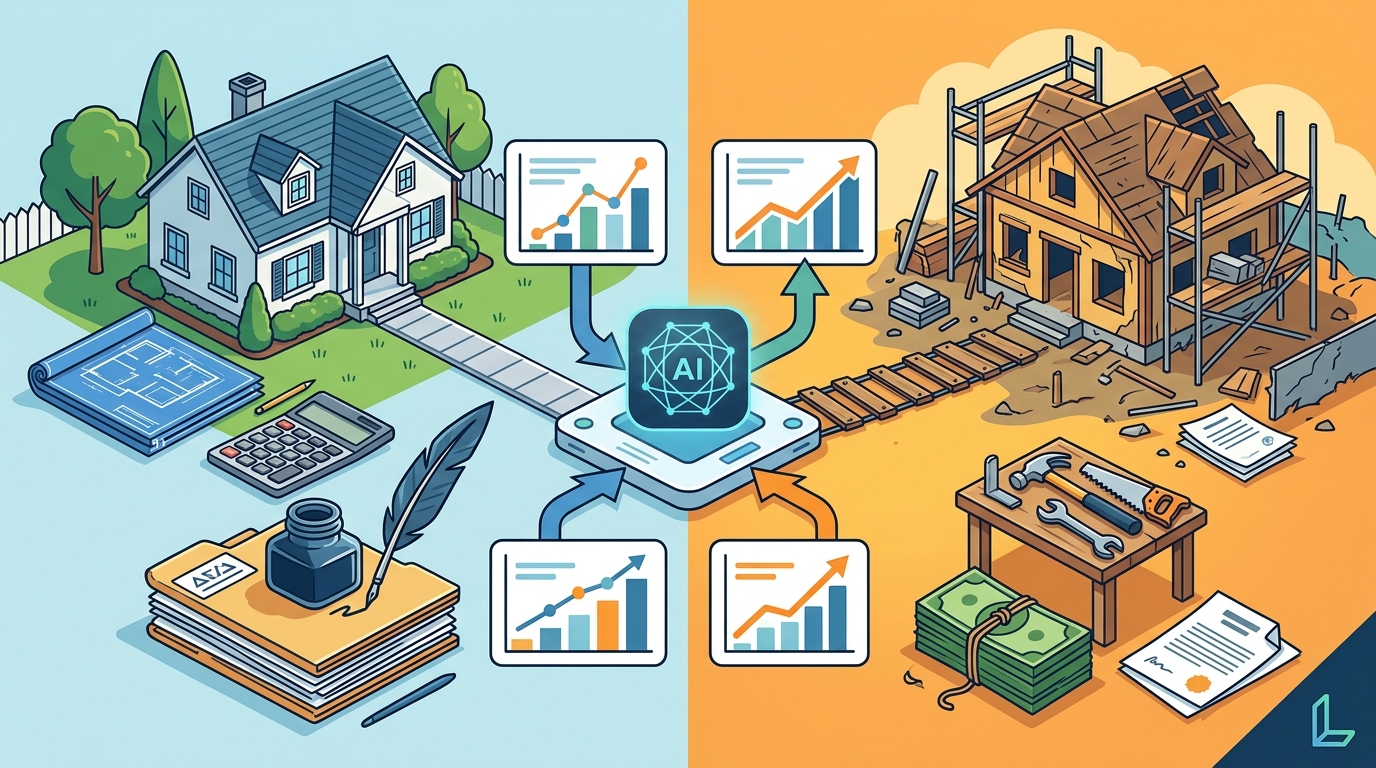
Loan Product Comparison Table
The following table summarizes the key differences between hard money and conventional loans to help you decide which path aligns with your investment strategy.
| Feature | Hard Money Loan | Conventional Loan |
|---|---|---|
| Primary Focus | Property Value (ARV) | Borrower Credit & Income |
| Closing Time | Days to 1 Week | 30 to 45+ Days |
| Interest Rates | Higher (8% - 15%+) | Lower (Market Dependent) |
| Loan Term | Short-Term (6-24 Months) | Long-Term (15-30 Years) |
| Income Verification | Not Required | Strict (Tax Returns, W-2s) |
| Best For | Fix & Flip, Auctions | Buy & Hold, Primary Home |
Key Takeaways
- Speed vs. Cost: Hard money offers rapid funding in days, while conventional loans take weeks but offer lower interest rates.
- Underwriting Focus: Hard money lenders evaluate the property's after-repair value, whereas conventional lenders scrutinize borrower credit and income.
- Flexibility: Hard money loans require no income documentation, making them ideal for self-employed investors or those with complex financial situations.
- Use Case: Use hard money for short-term projects like fix-and-flips or auction purchases. Use conventional loans for long-term holds or primary residences.
- AI Matching: Using an AI-driven platform like Lendersa allows you to compare offers from multiple lenders simultaneously, ensuring you get the best terms.
- Nationwide Reach: Lendersa connects borrowers with capital across all 50 states, Canada, and Puerto Rico, providing access to a diverse network of lenders.
- Competitive Bidding: Our Multi-Lender Protocol pits lenders against each other to negotiate the best terms for your specific loan scenario.
Frequently Asked Questions
Can I get a hard money loan with bad credit?
Yes. Hard money lenders primarily focus on the value of the collateral property rather than your credit score. As long as you have sufficient equity or a viable exit strategy, bad credit is often not a barrier to funding.
How fast can I close on a conventional loan?
Conventional loans typically take 30 to 45 days to close due to the extensive underwriting and appraisal processes required by banks. This timeline can vary based on the lender's workload and the complexity of the transaction.
What is the Multi-Lender Protocol?
The Multi-Lender Protocol is Lendersa's proprietary AI-driven process that matches your loan scenario with hundreds of lenders, compares their offers, and negotiates the best terms on your behalf. It eliminates the need to contact lenders individually.
Do I need to provide income documentation for a hard money loan?
No. Hard money loans are asset-based, meaning the lender's decision is based on the property's value and your equity. Income verification is generally not required, making these loans accessible to investors with non-traditional income.
What types of properties qualify for hard money loans?
Hard money loans can be used for a variety of property types, including residential, commercial, vacant land, and start-up construction. They are particularly popular for fix-and-flip projects and bridge loans.
How does Lendersa compare loans?
Lendersa uses advanced AI to instantly match your loan scenario with hundreds of hard money lenders, private money lenders, and banks. Our system sorts through dozens of lender matrices using a matching funnel to identify the absolute best programs for your specific property type and loan purpose.
Is Lendersa available outside the United States?
Yes. Lendersa has expanded its digital footprint to match borrowers with capital across all 50 states in the USA, Canada, and Puerto Rico, providing a broad network of funding options.
Get Your AI-Matched Offers
Stop searching and let lenders compete for you. Lendersa uses advanced AI to instantly match your loan scenario with hundreds of hard money lenders, private money lenders, and banks. You can view hard money offers or bank loans instantly, with no Social Security Number needed. Take control of your financing today by exploring the Lendersa Borrower Portal and discovering the best rates and terms for your next real estate investment.