

Securing capital for commercial real estate or undeveloped land requires navigating a complex landscape of private and institutional lenders. According to recent industry data, over 60% of commercial real estate transactions in 2024 were funded through non-bank or private capital sources rather than traditional depository institutions. This shift highlights the critical importance of understanding alternative financing structures. Investors who fail to diversify their funding sources often miss out on time-sensitive opportunities, particularly in the competitive vacant land market where speed and equity are paramount. (About Lendersa 50 Years)
Understanding Commercial Loan Structures
Commercial real estate financing differs significantly from residential mortgages. Lenders evaluate the property's income-generating potential rather than just the borrower's personal credit score. Commercial loans are long-term debt instruments used to purchase or refinance income-producing properties. These loans typically range from 5 to 25 years, with amortization periods extending up to 30 years.
The primary categories include conventional commercial mortgages, Small Business Administration (SBA) loans, and bridge loans. Conventional loans offer lower interest rates but require strict underwriting. SBA loans, specifically the 504 and 7(a) programs, provide government-backed guarantees that reduce lender risk. Bridge loans serve as short-term capital for properties needing immediate renovation or stabilization.
For investors seeking flexibility, Lendersa aggregates programs from big banks, credit unions, and private investors. This approach ensures that borrowers can access capital regardless of their specific property type or financial history. The platform's algorithm matches loan scenarios with hundreds of lenders to find the most competitive terms.
The Challenges of Vacant Land Financing
Vacant land is considered a high-risk asset by traditional lenders. Without an existing structure to generate income or serve as collateral value, banks are hesitant to extend credit. Vacant land loans are specialized financing products designed for the purchase of undeveloped property. These loans often require higher down payments, typically between 20% and 50%, and carry higher interest rates than improved property loans.
Financing options for vacant land include land loans, construction loans, and hard money loans. Land loans are suitable for buyers who intend to hold the property for investment. Construction loans are ideal for those planning to build immediately. Hard money loans offer the fastest closing times, often within days, which is crucial for auction purchases or time-sensitive deals.
Investors must also consider zoning regulations and environmental assessments. Lenders will evaluate the highest and best use of the land. A clear title and a detailed development plan are essential for securing favorable terms. Lendersa helps borrowers navigate these complexities by connecting them with lenders who specialize in land acquisition.
Hard Money vs. Conventional Lending
The choice between hard money and conventional lending depends on the investor's timeline, credit profile, and project scope. Hard money loans are asset-based, meaning the loan is secured by the property itself. Conventional loans are credit-based, relying heavily on the borrower's financial history.
| Feature | Hard Money Loans | Conventional Loans |
|---|---|---|
| Closing Time | Days to 2 weeks | 30 to 60 days |
| Interest Rates | Higher (8% - 15%+) | Lower (6% - 9%) |
| Down Payment | 20% - 30% | 15% - 25% |
| Credit Requirements | Flexible | Strict (720+ FICO) |
| Best For | Fix and Flip, Auctions | Long-term Hold, Refinance |
Hard money lenders prioritize the equity in the property over the borrower's personal finances. This makes them ideal for investors with bad credit or complex income situations. Conventional lenders offer lower costs but require a pristine financial profile. Lendersa's AI tools help borrowers compare these options instantly, ensuring they select the right capital source for their specific needs.
The Multi-Lender Protocol Advantage
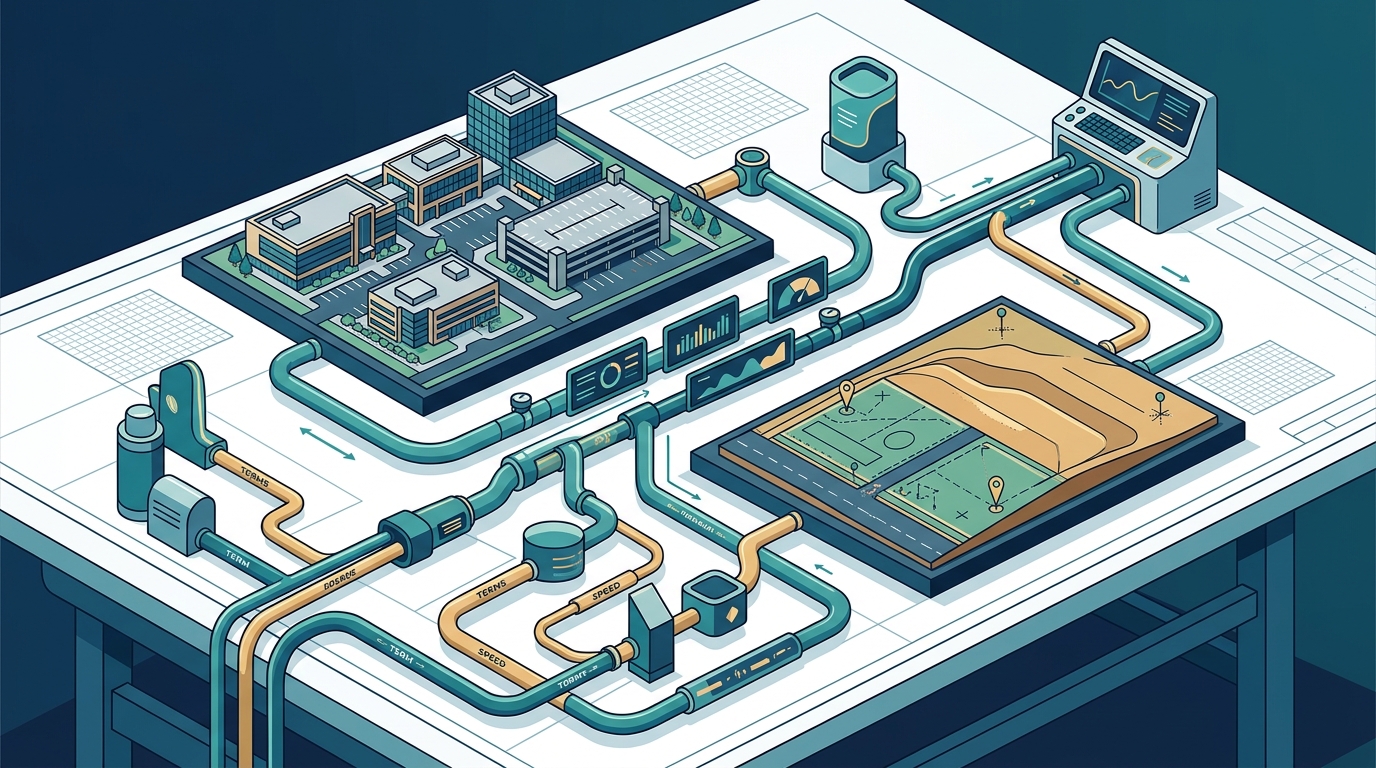
Lendersa utilizes a proprietary Multi-Lender Protocol to streamline the financing process. This system allows borrowers to submit their loan scenario once and receive competing offers from multiple lenders. The protocol eliminates the need to contact individual lenders separately, saving time and reducing application fatigue.
The process begins with a pre-application assessment. Lendersa's LoanScore™ tool evaluates the borrower's financial profile and property details. This score helps identify the most suitable loan programs. The LoanImprove™ tool then provides actionable insights to enhance the borrower's eligibility.
Once the application is submitted, the AI engine searches thousands of lender programs. It filters for the best rates, fastest closings, and highest loan amounts. The borrower receives a curated list of offers, allowing for easy comparison. This competitive environment drives lenders to offer their best terms to win the business.
For commercial and vacant land investors, this speed and access to capital are invaluable. The platform supports a wide range of loan types, including fix and flip loans, construction loans, and conventional mortgages. By leveraging Lendersa's network, investors can secure funding quickly and efficiently.
Eligibility and Underwriting Criteria
Underwriting standards vary significantly between hard money and conventional lenders. Hard money lenders focus on the Loan-to-Value (LTV) ratio. They typically lend up to 65% to 70% of the property's after-repair value (ARV) for fix and flip projects. For vacant land, LTV ratios are lower, often around 50% to 65%.
Conventional lenders require a Debt-to-Income (DTI) ratio below 43%. They also demand a minimum credit score, usually 680 or higher. Borrowers must provide extensive documentation, including tax returns, bank statements, and profit and loss statements. Hard money lenders require less documentation, focusing primarily on the property's value and the exit strategy.
Investors should prepare a detailed business plan for commercial loans. This plan should outline the property's income potential, renovation costs, and projected returns. Lendersa's Quote Comparison Dashboard allows borrowers to upload existing quotes and compare them against new offers. This transparency ensures that investors secure the most favorable terms.
Key Takeaways
- Commercial loans are income-based and typically range from 5 to 25 years in duration.
- Vacant land loans require higher down payments, often 20% to 50%, due to higher risk.
- Hard money loans offer fast closing times, often within days, ideal for auctions.
- Lendersa's Multi-Lender Protocol pits lenders against each other to secure the best terms.
- LoanScore™ and LoanImprove™ tools help borrowers optimize their eligibility before applying.
- Conventional loans offer lower rates but require strict credit and income verification.
- Bridge loans provide short-term capital for properties needing immediate stabilization.
Frequently Asked Questions
What is the fastest way to finance vacant land?
Hard money loans are the fastest option, with closings possible in as little as a few days. Lendersa's AI can match you with lenders ready to issue a Letter of Intent quickly.
Can I get a commercial loan with bad credit?
Yes, hard money and private lenders focus on property equity rather than personal credit. Lendersa connects borrowers with lenders who specialize in non-QM and subprime scenarios.
How does Lendersa's Multi-Lender Protocol work?
The protocol submits your loan details to a network of hundreds of lenders simultaneously. It then compares offers to find the best rates and terms, saving you from contacting lenders individually.
What is the typical down payment for a commercial property?
Conventional commercial loans typically require 20% to 25% down. Hard money loans may require 20% to 30%, depending on the property type and lender.
Does Lendersa require a Social Security Number to search?
No, you can view hard money offers or bank loans instantly without providing a Social Security Number during the initial search phase.
What types of commercial properties are eligible?
Lendersa handles financing for residential, commercial, and vacant land properties. This includes fix and flip projects, construction loans, and long-term holds.
Secure Your Commercial or Land Financing Today
Don't let financing delays cost you your next investment opportunity. Lendersa's AI-powered platform connects you with hundreds of hard money lenders, private investors, and banks. Whether you need a fast bridge loan for vacant land or a conventional mortgage for a commercial property, we help you find the best deal. Start your loan search now and let lenders compete for your business. Visit our FAQ page for more details or contact us for personalized assistance.