

How to Verify a Hard Money Lender's License in California
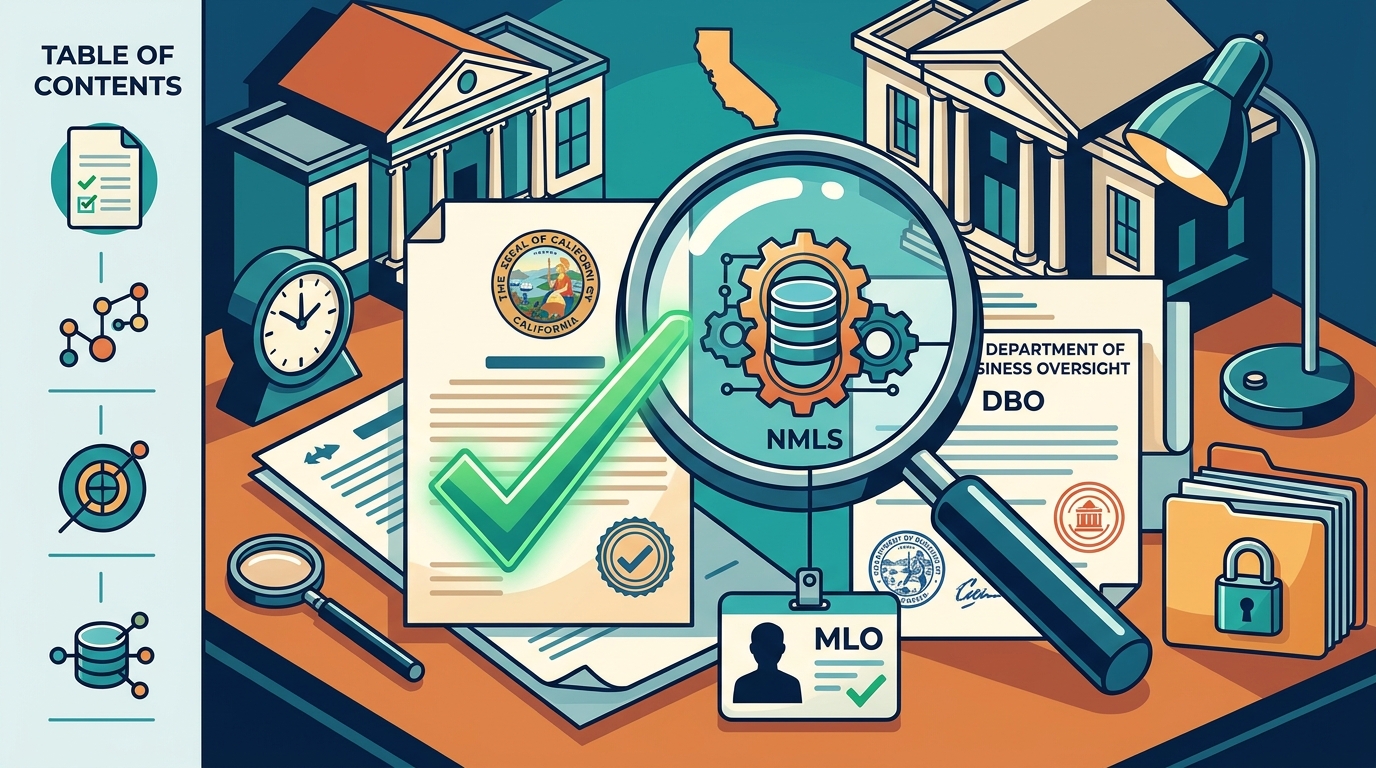
Verify a hard money lender's license in California by checking the NMLS Consumer Access database and the California Department of Business Oversight. Confirm the specific individual's Mortgage Loan Originator (MLO) license and the company's lender license. This two-step process protects you from unlicensed operators and ensures the entity is legally authorized to conduct business in the state.
Understanding California Lending Licenses
California regulates real estate lending through two primary frameworks. The federal NMLS system tracks individual loan originators, while the state Department of Business Oversight (DBO) oversees licensed lenders and brokers. A legitimate hard money lender must operate under a valid license in at least one of these categories. Private investors who lend their own funds may not always require a lender license, but any entity acting as a broker or arranging loans for others must be licensed.
Hard money lending is a form of asset-based financing where the loan is secured by real property rather than the borrower's credit history. Because these loans often involve higher risk and faster closing times, regulatory oversight is critical. In California, the California Financing Law (CFL) governs most residential mortgage lending. If a lender is not registered with the DBO or NMLS, they may be operating illegally or as an unlicensed private investor. Understanding this distinction is the first step in protecting your capital.
Verifying via NMLS
The National Mortgage Licensing System (NMLS) is the primary federal database for verifying individual loan originators. Every Mortgage Loan Originator (MLO) in the United States must be registered in this system. To verify a specific person, search the NMLS Consumer Access database using their full name and the state of California. The record will show their license status, expiration date, and any disciplinary actions.
For example, if a lender introduces you to a loan officer named "John Smith," you should search for "John Smith" in the NMLS database. If the record shows an active MLO license with a California endorsement, the individual is verified. If the record is missing or shows an expired license, do not proceed. This step ensures the person you are dealing with is actually authorized to originate loans. Lendersa's platform connects borrowers with verified lenders, but independent verification remains a best practice for all borrowers.
Checking State Regulation
While NMLS verifies individuals, the California Department of Business Oversight (DBO) regulates the lending entities themselves. You can search the DBO's license lookup tool to confirm if a company holds a valid lender or broker license. This is crucial because a company might have licensed employees but lack the corporate license to operate in California. The DBO database provides information on the entity's legal name, license type, and status.
For instance, a company named "Golden State Capital" might appear on NMLS for its employees, but you must confirm the entity itself is licensed by the DBO. If the company is a private investor pool, it may not hold a traditional lender license, but it should still be transparent about its structure. Always ask for the company's NMLS ID and DBO license number. If they refuse to provide these, it is a major red flag. Verifying both the individual and the entity creates a robust safety net.
Identifying Red Flags
Even with license checks, certain behaviors indicate a lender may be operating outside legal boundaries. A common red flag is a lender who refuses to provide a written loan agreement or term sheet before collecting fees. Legitimate lenders provide clear documentation outlining interest rates, points, and repayment terms. Another warning sign is a lender who pressures you to wire money quickly without allowing time for due diligence.
Additionally, check if the lender's physical address matches their license records. Scam lenders often use P.O. boxes or residential addresses that do not correspond to a legitimate business office. You can verify the address through mapping tools to see if it is an actual commercial space. If the lender's online presence is polished but their license records are sparse or missing, treat it as a warning. Trust your instincts and rely on verified data rather than verbal promises.
Key Takeaways
- Always verify individual MLO licenses through the NMLS Consumer Access database.
- Confirm the lending entity's license status with the California Department of Business Oversight.
- Request the lender's NMLS ID and DBO license number in writing.
- Be wary of lenders who refuse to provide written term sheets or license details.
- Check that the lender's physical address matches their official license records.
- Use platforms like Lendersa to access pre-vetted lender networks, but perform your own final verification.
Frequently Asked Questions
What is an MLO license?
An MLO license is a federal registration required for individuals who originate mortgage loans. It is tracked in the NMLS database and ensures the originator meets education and background check requirements.
Do private investors need a license?
Private investors who lend their own funds may not need a lender license, but they must comply with state laws. If they act as brokers or arrange loans for others, they must be licensed.
Where can I find a lender's NMLS ID?
You can find a lender's NMLS ID on their website, marketing materials, or by asking them directly. You can also search the NMLS database by name to find the ID. according to How to Check
Is the California DBO the same as NMLS?
No, they are different. NMLS is a federal system for individual originators, while the DBO is a state agency that licenses lending entities and brokers in California.
What should I do if a lender has no license?
Do not proceed with the transaction. Report the unlicensed activity to the California Department of Business Oversight and seek alternative financing from verified lenders.